Conditions
Winter driving, and what actually changes
Snow, slush, freezing rain and black ice are four different problems. What changes about your speed, your gap and your hands, and what to do when the car lets go.
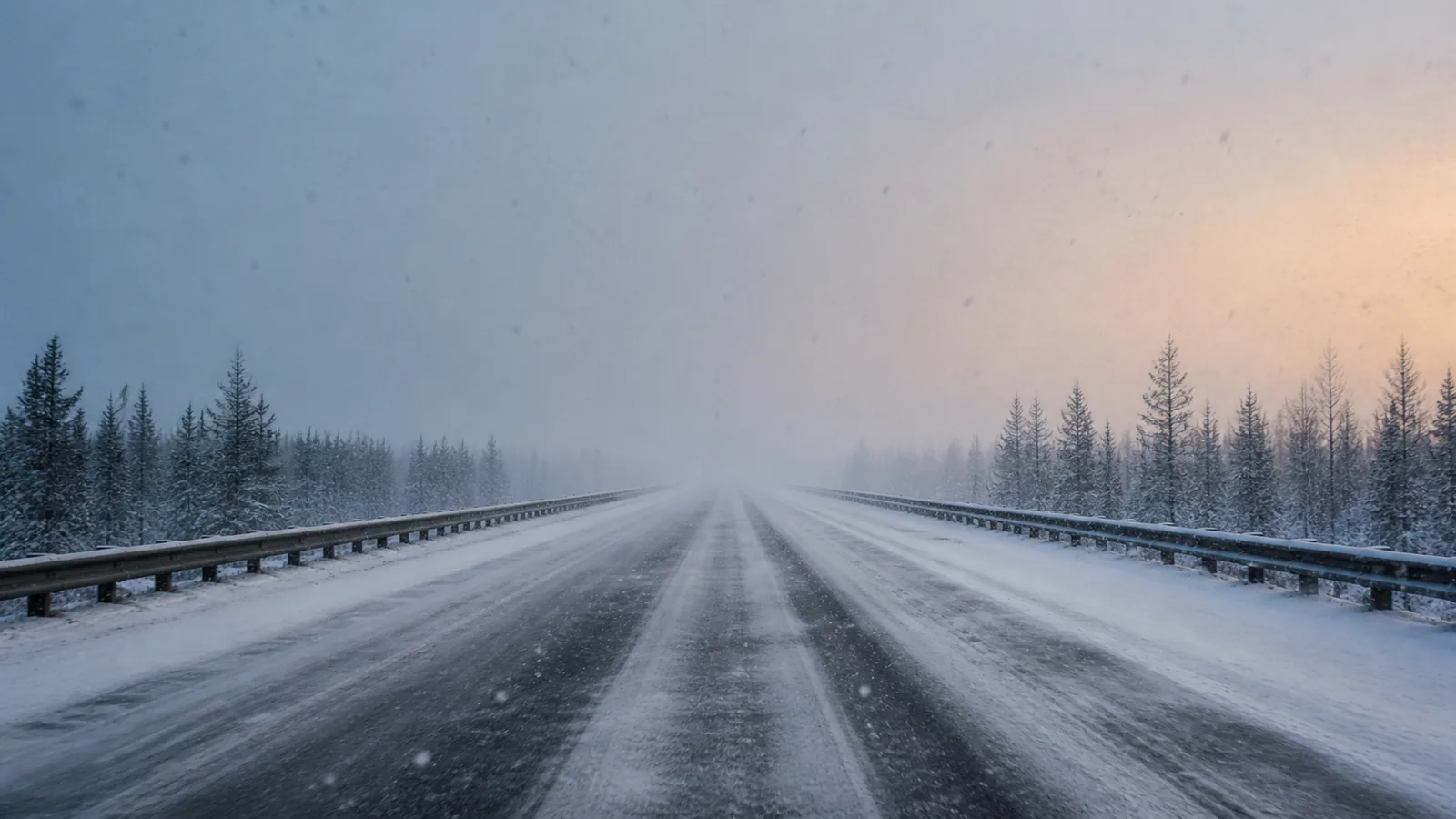
What actually changes about the way you drive on each kind of winter surface, and how to recover a skid, rather than a list of things to keep in the trunk.
Winter driving advice usually arrives as a list of objects: a shovel, a blanket, a bag of sand. Those are worth having, and they are not the reason people end up in the ditch. Nearly every winter incident comes from one of three things: too much speed for the grip available, too little space to correct anything, or an input that was too sudden.
This guide is about those three, plus the recovery when it goes wrong anyway. Knowledge tests ask about winter conditions in every province, and the questions tend to reward the driver who understands why the rule exists rather than the one who memorised the number.
Winter is not one road surface
Cold and dry is nearly normal driving, with slightly harder rubber and a longer stopping distance than you expect. Fresh snow on a cold road is predictable and gives some grip, and it is the surface people fear most and cope with best.
Packed snow polished by traffic is much worse than fresh snow, and it looks similar. Slush is a different problem again: deep enough and it pulls at the steering, and it can float the tires away from the surface entirely. Freezing rain is the worst of all, because it coats everything, including your windows, faster than the wipers can clear it.
Black ice is the one that catches good drivers. It is a thin clear layer over dark pavement, so the road looks wet rather than icy, and it usually appears where the surface is coldest rather than where the weather is worst. Treat a road that looks wet when the temperature is near freezing as ice until it proves otherwise.
- Slippery when wet
- Steep hill
- Deer crossing
Everything takes longer, so the gap has to be longer
The following gap is the one control that fixes most winter problems at once. It buys time to see what the car ahead is doing, time to slow gradually rather than suddenly, and room to steer around something rather than braking at it.
The counting method works the same in winter as in summer: pick a fixed object beside the road, start counting when the car ahead passes it, stop when you reach it. What changes is the answer you accept. The gap that is barely enough on a dry road with a clear view is nowhere near enough on snow, and it has to open up further again behind a large vehicle that throws spray, or at night.
The reason a gap in seconds beats a gap in car lengths is that it scales with speed by itself. You do not have to recalculate anything at highway speed, you just keep counting.
Counting your following distance
- Your vehicle
- Another vehicle
- Where it goes
Smooth is the entire technique
Grip is a budget, and you spend it on three things: slowing, turning and accelerating. On a dry road the budget is large enough that you never notice. On snow it is small, and the way you go through it is by asking for two at once, or by asking for any of them suddenly.
So separate them. Brake in a straight line before the corner, steer through the corner without braking, and accelerate once the wheel is coming back straight. Do each thing gently and finish it before starting the next. That is not advanced technique, it is the whole of winter driving.
The same applies to the wheel. Small steering movements, held. A sharp correction on ice is a request for grip that is not there, and the car answers by going straight on while pointing somewhere else.
Watch further ahead than you would in summer. Every input you make early is a gentle input, and every input you make late is a sudden one.
Where the ice is, before it is anywhere else
Bridges and overpasses freeze first. They lose heat from underneath as well as from the top, so the road can be merely wet at both ends and genuinely icy in the middle, with no change in appearance to warn you.
Shaded corners are next. A stretch of road under trees or beside a tall building may never see sun all day, so it holds ice long after everything around it has dried. So do intersections, where cars have polished the surface by braking and pulling away on the same few metres over and over.
The pattern is worth learning as a habit rather than as a list. Anywhere the road is colder, or anywhere traffic has polished it, is where the grip goes first. Do your braking before those places, not on them.
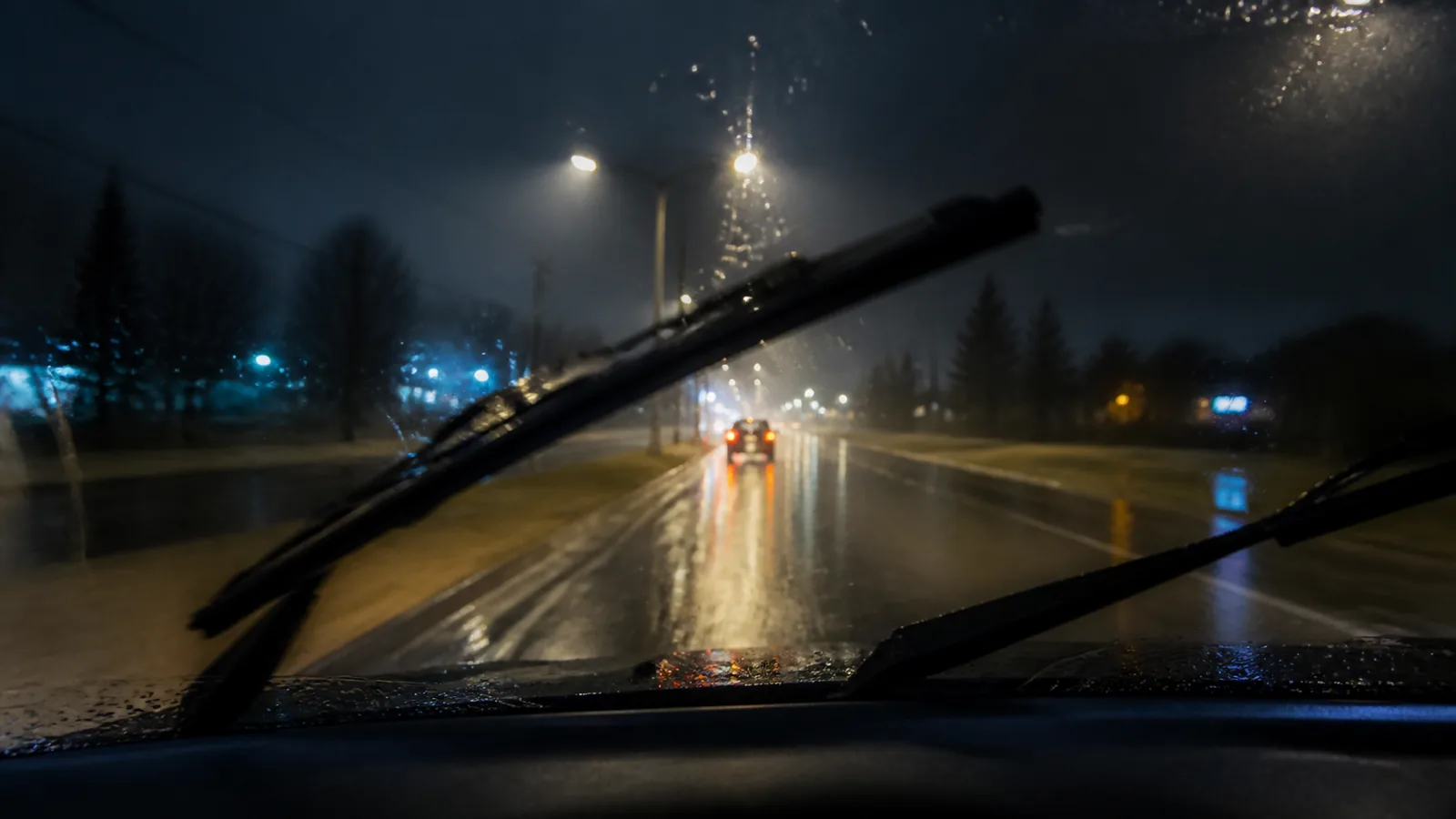
When it lets go anyway
A rear wheel skid means the back of the car has stepped out and the nose is pointing across the lane. The correction is the same every time, and it is mostly about what you stop doing.
Come off the throttle and off the brake. A locked or driven wheel cannot grip, and a rolling one can. Look at the space you want to be in, straight down the lane, because your hands follow your eyes and a driver staring at the ditch steers into it. Steer the front wheels toward that space, keep the correction small, and unwind the steering as grip returns.
A front wheel skid feels different: you turn the wheel and the car carries on straight. The answer there is to ease off and, briefly, to straighten the wheel. More steering angle in a front skid gives you less grip, not more.
Both recoveries are easier to perform than to explain, and both are much easier at a speed you chose than at a speed the conditions chose for you.
Recovering a rear wheel skid
- Your vehicle
- Where it goes
Before you move: the car, the windows and the rules
Clear the whole car, not a porthole in the windscreen. Snow left on the roof slides onto your own glass under braking and onto the car behind you at speed. Clear the lights and the plate as well, because a car nobody can see is a car nobody yields to.
Check the exhaust is not packed with snow before you start the engine, especially after a plough has been past, and give the glass time to clear properly rather than driving off while it is still fogged. Most of what makes winter driving safer happens before the car moves.
Winter tire rules differ by province, and some jurisdictions require them on certain roads at certain times of year. We do not publish those requirements here because we do not yet hold them from the authorities that set them. Check your own licensing body before you rely on any figure or date you read, including on this site.
Worth remembering
- A wet looking road near freezing is black ice until proven otherwise.
- Bridges, overpasses, shaded corners and polished intersections lose grip first.
- Count your following gap in seconds and accept a much bigger answer than you would on a dry road.
- Brake in a straight line, steer without braking, accelerate as the wheel comes straight. One thing at a time.
- In a rear skid: off the throttle, off the brake, look where you want to go, steer there, small corrections.
- Clear the entire car, including the roof, the lights and the plate, before you move.
Questions people ask
How do you recover from a skid on ice?
Come off the throttle and the brake so the tires can roll again, look at the space you want to reach rather than at the hazard, and steer the front wheels toward it with small corrections. Unwind the steering as grip comes back.
Where does black ice form first?
On bridges and overpasses, because they lose heat from underneath as well as on top. Then shaded corners that never see sun, and intersections where traffic has polished the surface.
How much following distance do you need in snow?
Considerably more than on a dry road with a clear view, and more again behind a large vehicle or at night. Count in seconds against a fixed object beside the road, because a gap measured that way stretches by itself as your speed rises.
Are winter tires required in Canada?
The rules differ by province, and some roads carry seasonal requirements. We do not publish those requirements until we hold them from the authority that sets them, so check with your own licensing body rather than relying on a general answer.
Now answer some questions on it
Read next
Sharing the road with cyclists, pedestrians, motorcycles and trucks
Four kinds of road user, four different ways drivers hurt them, and the one habit that prevents each. Drawn out, with the mirrors and the space you cannot see.
What to do after a collision
Stop, make the scene safe, check for injuries, exchange the right information, and say nothing you cannot stand behind. What holds everywhere, and what changes by province.