Ontario asks about weather and night driving in 6 of our questions. Rain, snow, ice, fog and darkness all attack the same two things: how far you can see and how much grip you have. This is how to drive when one or both are missing.
About 8 minutes to read6 Ontario questions on thisLast reviewed 2026-08-27
Worth remembering
Bad conditions cut two things: how far you can see and how much grip you have. Slow down, add space, be smooth.
Grip is a budget. Brake in a straight line, then turn; doing both at once is what puts cars off the road.
The first rain after dry weather is the slipperiest, and worn tires make hydroplaning much more likely.
Hydroplaning: ease off, hold the wheel straight, and wait for the tires to touch the road again.
Bridges, overpasses and shaded stretches ice up before the rest of the road.
Clear snow from all windows, mirrors, lights, the roof and the hood before driving.
In fog use low beams, not high beams, and never stop in a traffic lane when visibility fails.
At night, do not overdrive your headlights, and dim high beams for oncoming and leading traffic.
Two things change, and everything follows from them
Bad conditions do not invent new rules. They shrink the two resources every rule depends on: the distance you can see, and the grip between your tires and the road. Once you think of it that way, the response is always the same three moves. Slow down, leave more space in front, and make everything you do with the wheel, the brake and the accelerator smoother than usual.
Grip is a fixed budget, and steering, braking and accelerating all spend from it. On dry pavement there is enough for two at once. On snow or ice there is barely enough for one, which is why braking and turning at the same moment is what puts cars into ditches. Do your braking in a straight line, then turn. Get back on the accelerator only once the wheel is straightening.
Space is the other half. Every reason to slow down is also a reason to lengthen the gap in front of you, because stopping distances grow far more than most drivers expect once the surface is wet, snowy or icy. The counting method from the lesson on speed and following works the same way here; you just need a longer count.
Rain and standing water
The most treacherous rain is the first rain after a dry spell, when water lifts oil and rubber off the surface and makes a film slicker than the same road will be an hour later. Slow down early when the road starts to shine, and expect braking to take longer than the light rainfall suggests.
Standing water brings hydroplaning, where a wedge of water lifts the tires clear of the road and the steering suddenly goes light and vague. The response is not to brake or wrench the wheel. Ease off the accelerator, hold the wheel straight, and wait the moment out until the tires touch the road again. Worn tires and higher speed both make it far more likely, which is another argument for checking tread and slowing in the wet.
Rain also takes away vision. Use the wipers and turn your headlights on, both so you can see and so you can be seen; several provinces require headlights whenever wipers are running or whenever visibility is limited. Following a large vehicle in heavy rain puts a wall of spray on your windshield, so drop back rather than sit in it, and use the defroster when the inside of the glass starts to mist.
Snow, ice and the Canadian winter
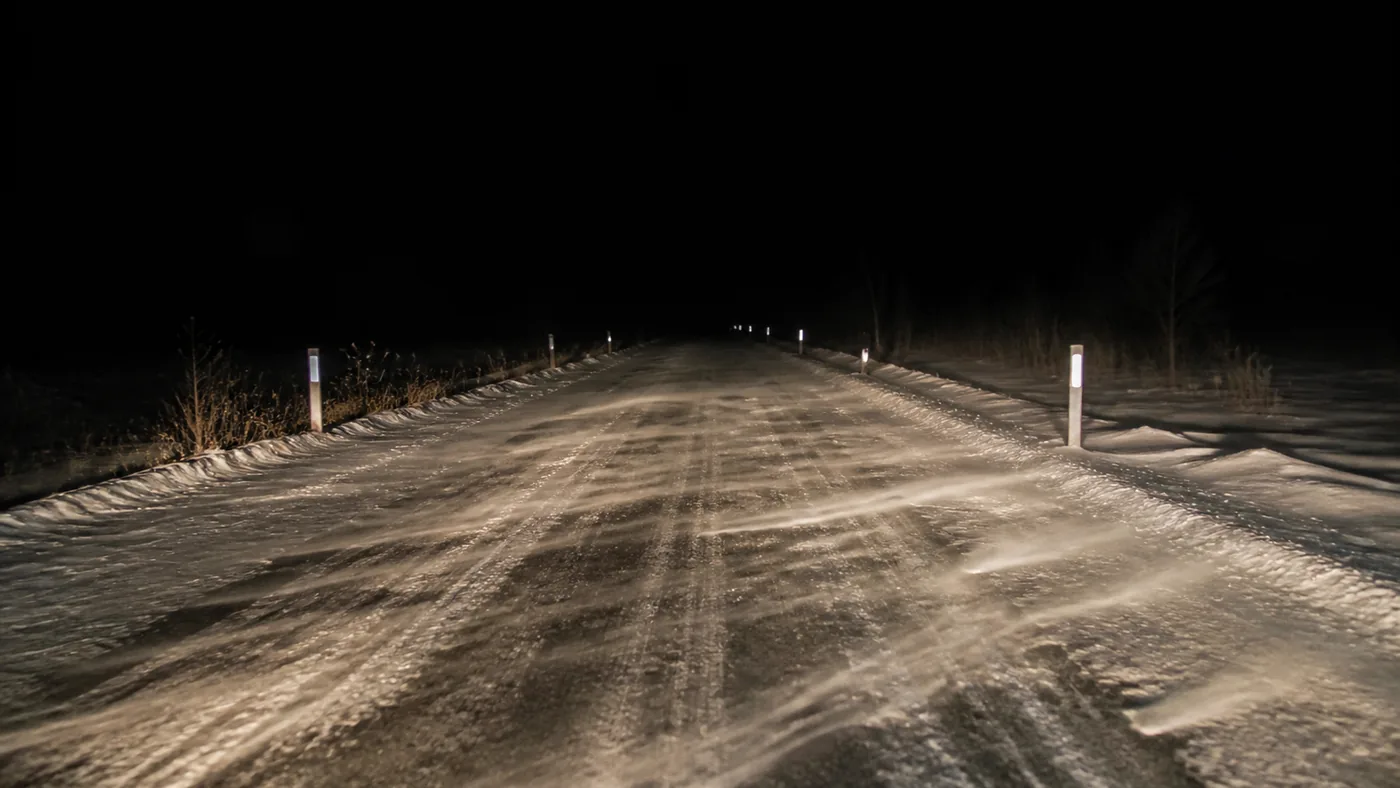
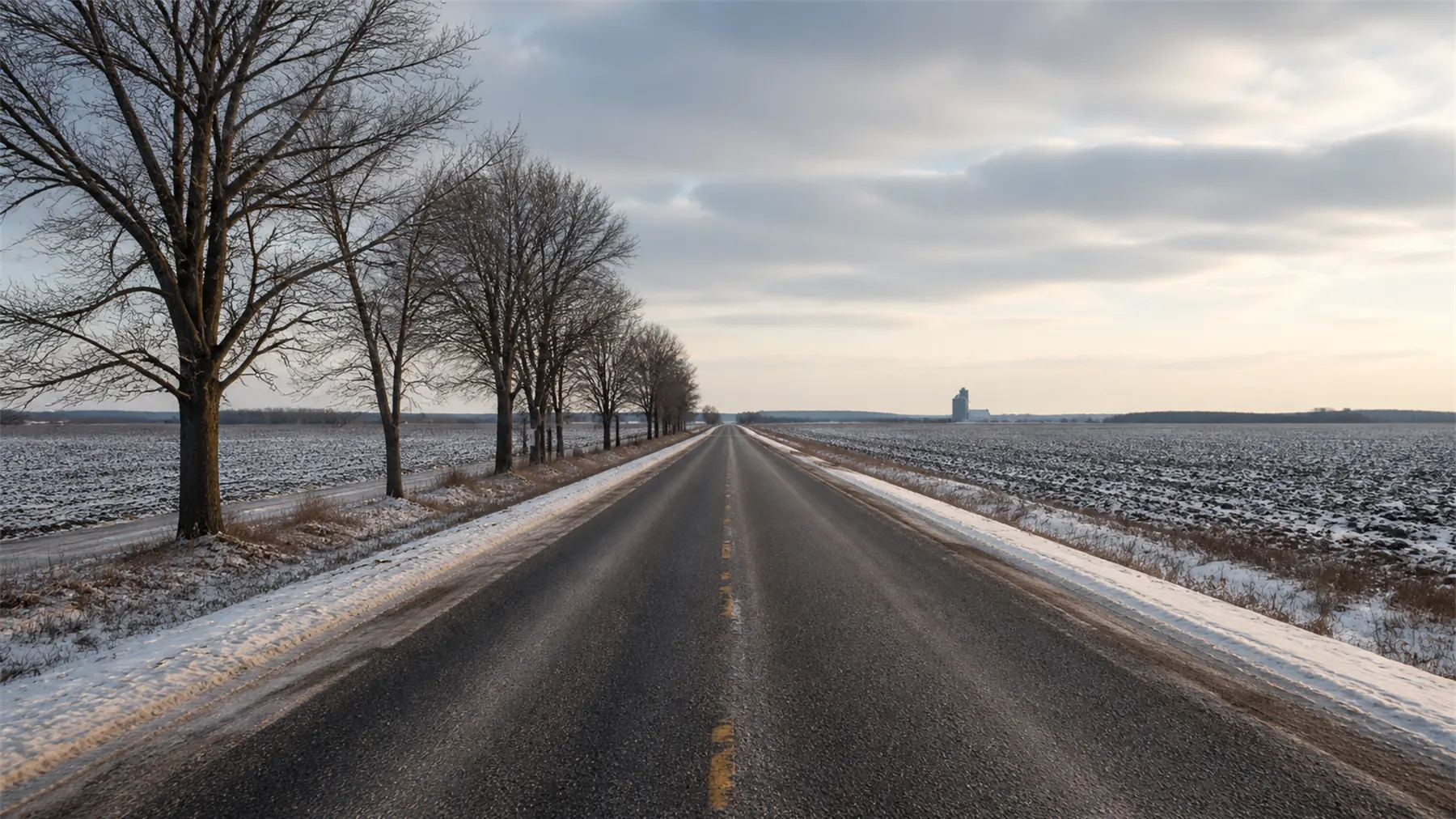
Snow and ice are not one surface but many, and the dangerous ones are the least obvious. Black ice forms on a road that looks merely wet, most often in the early morning, in shaded stretches, and on bridges and overpasses, which lose heat from below and freeze before the road on either side of them. Packed polished snow at intersections, where hundreds of vehicles have braked and pulled away, is another place to expect no grip at exactly the moment you need it.
Drive winter roads with gentleness as the main technique: gentle on the accelerator so the wheels do not spin, early and light on the brakes, and no sudden steering. Look much further ahead than usual so that you can slow gradually rather than braking late. Leave far more room in front, because on ice the stopping distance can be many times what it is on dry pavement.
Prepare the vehicle as well as the driving. Clear snow and ice from every window, the mirrors, the lights, the roof and the hood before you set off, because snow blowing off a roof blinds the driver behind and can be an offence. Keep the washer bottle full with winter fluid, watch the fuel level, and carry a scraper, a brush, a shovel, a blanket and warm clothing. Some provinces require winter tires for part of the year, and some require them on certain highways in a defined season, so check the requirement and the dates for the province you drive in.
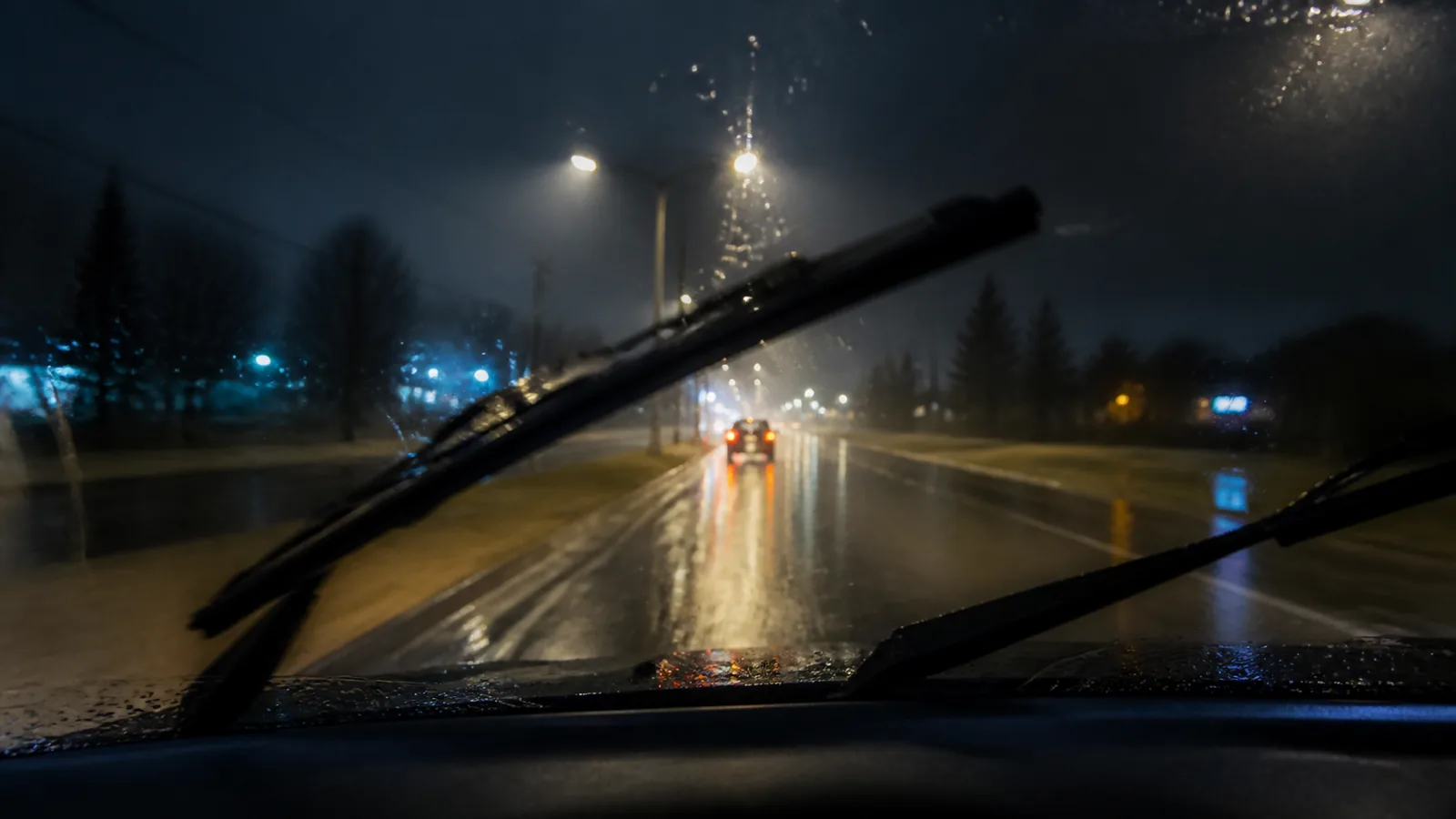
A rain soaked road at night. Stopping distance and sight lines both change here, and the correct answer changes with them.
Fog, whiteouts and glare
In fog, use low beam headlights. High beams bounce off the droplets and throw the light straight back at you, making things worse. Slow to a speed that lets you stop inside the distance you can actually see, use the wipers and defroster because fog wets the glass, and if you have fog lamps use them with the low beams.
If fog or blowing snow becomes too thick to continue, do not stop in a traffic lane. Take an exit or a side road, or pull well off the road, then turn on your hazard lights so nobody follows your tail lights into the back of you. A whiteout on an open prairie highway can drop visibility to nothing in seconds, and drivers who stop on the road in one are the reason those crashes involve so many vehicles.
Glare is the opposite problem and just as blinding. A low sun in the morning or the late afternoon, especially on a dirty or streaked windshield, can hide a pedestrian completely. Keep the glass clean inside and out, use the visor, wear sunglasses in daylight, and slow down when you cannot see. Sun low in the sky also hits the driver coming the other way, so assume they cannot see you either.
Driving at night
The main danger after dark is overdriving your headlights: travelling at a speed that would take you further to stop than the distance your lights actually reach. Low beams show only a short stretch of road, which is why a familiar road at night still deserves less speed than the same road in daylight.
Use high beams on open roads where there is no other traffic, and dim them when a vehicle approaches or when you come up behind one, since a mirror full of your high beams blinds the driver in front. If an oncoming driver leaves theirs on, do not stare into them and do not retaliate. Look toward the right edge of your lane and use the line at the edge of the road to steer by until they pass.
Night brings other changes too. Depth and speed are harder to judge, tired drivers are on the road, animals move at dawn and dusk and freeze in headlights, and pedestrians and cyclists in dark clothing appear far later than you expect. Keep your headlights, tail lights and windows clean, dim the dashboard so your eyes stay adjusted to the dark, and take breaks on a long night drive, because fatigue and darkness together are a great deal worse than either alone.
Ontario and this topic
Ontario
Ontario follows the same rules on this topic
Nothing above changes when you cross into Ontario, so there is no separate Ontario version of this lesson to read. The stages, the fees and the format of the test are the numbers that do change, and those sit on the Ontario page with the source behind each one.
The 6 practice questions on this topic in the Ontario bank are written for Ontario, and each one shows the authority it comes from when you answer it.
Four wheel drive means I can stop and turn like it is summer.
What is actually true
It helps you get moving on a slippery surface and does nothing for stopping or steering, because those depend on the same four tire contact patches every other car has. Confidence from all wheel traction is why some of these vehicles end up in the ditch first.
What people think
High beams help me see in fog.
What is actually true
The light reflects back off the water in the air and reduces what you can see. Low beams sit lower and throw less of it back, which is why they are the correct choice.
What people think
Clearing a patch of the windshield is enough to set off.
What is actually true
You need all the glass, the mirrors and the lights, and the roof and hood cleared as well. Snow sliding off a roof blinds the driver behind you and can be an offence.
What people think
The road just looks wet, so it is fine.
What is actually true
That is exactly what black ice looks like, and it forms first on bridges, overpasses and shaded stretches. If the temperature is near freezing, treat shiny pavement as ice.
What people think
If a whiteout hits, the safest thing is to stop where I am.
What is actually true
Stopping in a traffic lane in poor visibility is how multi vehicle pile ups start. Get right off the road if you can, turn on the hazard lights, and wait there.
Check yourself
Three questions from the Ontario bank on weather and night driving. Answer them in your head first, then open the answer to see the rule it comes from.
Weather and night driving1 of 3
The sun has just gone down and there is still plenty of light in the sky.
AHeadlights are needed only once it is fully dark
BDaytime running lights are enough until midnight
CHeadlights are needed only on roads without street lighting
DHeadlights are needed from half an hour before sunset until half an hour after sunrise
Show the answer
The answer is D. Headlights are needed from half an hour before sunset until half an hour after sunrise
Lights go on from half an hour before sunset until half an hour after sunrise, and any time you cannot see clearly for 150 metres. Daytime running lights are not the same thing, because on many cars they leave the tail lights dark and a driver coming up behind you sees nothing. At dusk the point of lights is being seen more than seeing.
Highway Traffic Act (Ontario)
Weather and night driving2 of 3
You are using high beams on a dark rural road when a car appears in the distance coming the other way.
AKeep the high beams on until the other driver dips theirs
BDip to low beams before you come within 150 metres of an oncoming vehicle, and within 60 metres when you are following one
CFlick between high and low so the other driver notices you
DDip only if they flash you first
Show the answer
The answer is B. Dip to low beams before you come within 150 metres of an oncoming vehicle, and within 60 metres when you are following one
High beams that reach an oncoming driver leave them briefly unable to see anything, which is the last thing you want at closing speed. The set distances exist so the change happens before the dazzle rather than after it. The same courtesy applies from behind, where your high beams bounce off the mirrors of the car in front.
Highway Traffic Act (Ontario)
Weather and night driving3 of 3
You drive into thick fog and your high beams seem to be making the view worse.
AKeep the high beams on, since more light is always better
BTurn on the hazard lights and keep your speed up to get through it
CFollow the car ahead closely and use its tail lights to keep your bearings
DSwitch to low beams and slow to a speed that matches what you can see
Show the answer
The answer is D. Switch to low beams and slow to a speed that matches what you can see
High beams bounce off the water droplets and throw the light straight back at you as a white wall. Low beams sit lower and aim down, so they light the road instead of the fog. Following the car ahead closely is the classic fog mistake: it feels reassuring while it removes both your view and your room to stop.
Highway Traffic Act (Ontario)
Now go and answer some questions
The Ontario bank holds 6 questions on weather and night driving. Answering them now, while the lesson is fresh, is how you find the parts that only felt clear.
We use Google Analytics and Microsoft Clarity to see which pages help learners, and advertising cookies to keep the site free to use. Accept to allow them, or decline. How your data is handled