Emergencies
What to do after a collision
Stop, make the scene safe, check for injuries, exchange the right information, and say nothing you cannot stand behind. What holds everywhere, and what changes by province.
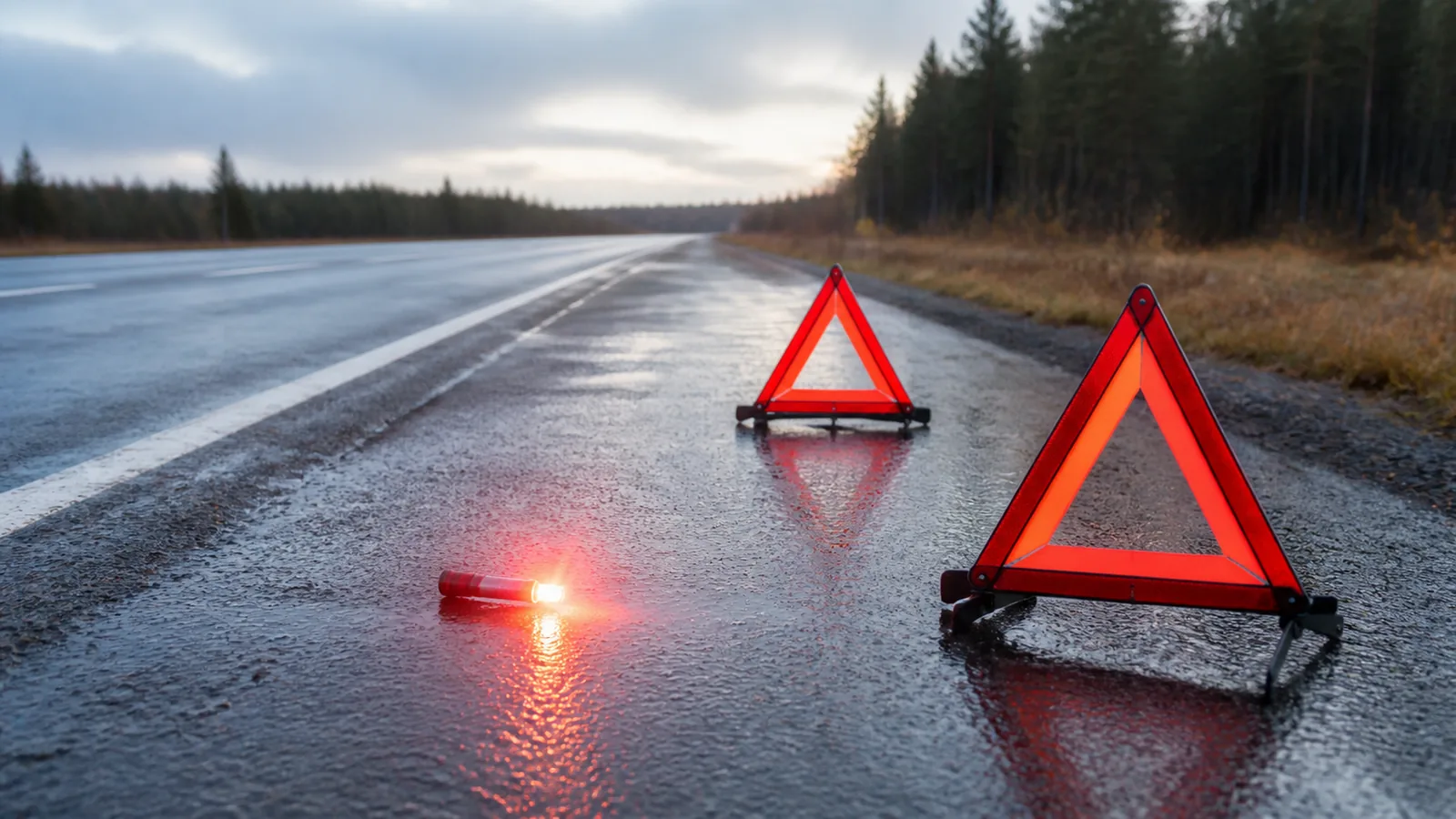
What to do, in order, in the minutes after a collision, and which parts of the answer depend on which province you are in.
Almost nobody thinks clearly straight after a collision, even a small one. The useful preparation is not a list of rules, it is an order of operations simple enough to follow while your hands are shaking.
The order below holds anywhere in Canada. What differs by province is the reporting: when you must report a collision, to whom, and above what level of damage. Those thresholds are set provincially and we do not publish them here, because we do not hold them from the authorities that set them. Every knowledge test asks about the duties at the scene, and those are the part that does not move.
Stop. That part is not optional
The duty to stop applies to every collision, including the ones that look like nothing: a mirror clipped in a parking lot, a bumper tapped at a light, a parked car you touched with nobody around. Driving away from a collision is treated as a serious offence, and the size of the damage does not change the duty.
If you hit an unattended vehicle or property and cannot find the owner, the duty does not disappear, it becomes a duty to leave your information and to report it. A note on a windscreen with your name and a phone number is the minimum, not the whole answer.
Stopping also means stopping in a way that does not create a second collision. Get the car out of a live traffic lane if it is driveable and it is safe to move it, put the hazard lights on, and get people out of the road rather than standing beside the wreck in a lane.
Injuries first, and the call that goes with them
Check yourself, then your passengers, then the other vehicle. Injuries do not always announce themselves: shock hides pain, and a person who says they are fine at the roadside may not be. If anybody is hurt at all, that is an emergency call.
Do not move an injured person unless leaving them where they are is more dangerous than moving them, which usually means fire or a live traffic lane. Neck and back injuries are made worse by well meant help.
Call emergency services when someone is hurt, when the road is blocked, when you suspect the other driver is impaired, when they refuse to give their information, or when they drive off. Those situations are not negotiable and are not affected by any provincial reporting threshold.
Try it on real questions
Collision and emergency questions sit in the rules section.
What to exchange, and what to collect
Exchange names, addresses, phone numbers, driver licence details, plate numbers and insurance information. Take the make, model and colour of the other vehicle as well, because plates get written down wrong more often than you would think.
Then collect what nobody can give you later. Photographs of both vehicles from several angles, wide enough to show where they came to rest and where the damage is. The position of the vehicles before anything is moved. The road, the signs, the lane markings, the weather and the light. The time and the exact location.
Ask anyone who stopped for a name and a number before they leave. A witness who saw the whole thing and drove away is worth nothing to anybody, and independent witnesses are the piece of evidence people most often fail to secure.
Say less than you want to
Give the facts and stop there. What you were doing, where you were going, what you saw. Do not offer a conclusion about who caused it, and do not agree to one at the roadside, because you are working from a partial view of an event you were inside.
This is not about being difficult. Fault is worked out from evidence, not from what two rattled people said to each other in the first two minutes. An apology offered out of decency reads very differently written into a claim file later.
Equally, do not accept an offer to settle it privately with cash and no report, however reasonable it sounds. You cannot see the other vehicle damage or the injuries yet, and the arrangement falls apart the moment either turns out to be worse than it looked.
When the emergency vehicles arrive, and when you are the one driving past
At the scene, the job is to be out of the way and easy to find. Stand clear of traffic, keep the hazard lights on, and let the responders work rather than following them around explaining. They will come to you.
The other half of this is being the traffic on the far side. Where an emergency vehicle is approaching, pull as far right as you safely can and stop, and never do that inside an intersection, because the intersection is exactly the space it needs. Where nothing divides the road, traffic coming the other way pulls right and stops as well.
Passing a scene already being worked, slow down and move over where there is a lane to move into. The people standing beside a stopped vehicle with lamps flashing have nothing between them and your car.
Making room for an emergency vehicle
- Your vehicle
- Another vehicle
- Where it goes
- The point they meet
Reporting and insurance, which is where the provinces differ
After the scene, the rules stop being universal. Provinces set their own reporting duties, their own damage thresholds and their own time limits, and they differ enough that a rule of thumb from another province is worse than no rule at all.
The insurer you deal with differs too. In British Columbia the public insurer and the licensing authority are the same organisation, and in Quebec the provincial insurance board sits alongside the licensing process. Elsewhere your insurer is a private company, and the reporting path is separate from the licensing one.
So the last step at the scene is the same everywhere: write down what happened while it is fresh, before you talk to anybody about it. The specifics of who you notify, and by when, come from your own licensing body and your own insurer, and they are worth looking up before you need them rather than afterwards.
Worth remembering
- Stop. The duty to remain applies however small the damage looks.
- Make the scene safe: out of live lanes if the car moves, hazard lights on, people off the road.
- Call emergency services for any injury, a blocked road, a suspected impaired driver, a refusal to exchange information, or a driver who leaves.
- Exchange licence, plate and insurance details, then photograph the scene before anything moves.
- Get a name and number from every witness before they drive away.
- Give facts, not conclusions, and never settle privately at the roadside.
- Reporting duties and thresholds are provincial. Look up your own before you need them.
Questions people ask
What should you do first after a car accident?
Stop, and make the scene safe: move the car out of a live lane if it is driveable and safe to move, put the hazard lights on, and get people off the road. Then check for injuries, starting with yourself and your passengers.
Do I have to report a minor collision?
Reporting duties and damage thresholds are set by each province, so the answer depends on where you are. The duty to stop and exchange information applies to every collision regardless. Check your own licensing body for the reporting rule rather than relying on a general figure.
What information do I have to exchange after a collision?
Name, address, phone number, driver licence details, plate number and insurance information, both ways. Take the make, model and colour of the other vehicle as well, and photograph the scene before the vehicles are moved.
Should I apologise at the scene of a collision?
Give facts rather than conclusions. You are working from a partial view of an event you were inside, and fault is settled from evidence later. Do not agree to a private cash settlement at the roadside either, because neither the damage nor any injury is visible yet.
Now answer some questions on it
Read next
Winter driving, and what actually changes
Snow, slush, freezing rain and black ice are four different problems. What changes about your speed, your gap and your hands, and what to do when the car lets go.
How graduated licensing works across Canada
Every province runs its own version of the same three step licence. Here is what the learner stage, the middle stage and the full licence mean, and where the four biggest provinces differ.