Alberta Class 7 learner's test practice 2026: 125 free questions
For the real Class 7 learner's test, 30 questions, pass 25 of 30, simulation, ends at 25 correct or 6 wrong. This free practice hub has 125 questions with the answer, an explanation and a citation. Source: Government of Alberta, Driver knowledge test, checked 2026-09-15.
125 questions65 on road signs60 on the rulesPass mark 25 of 30 correct
The number beside each subject is how many questions we have written on it for Alberta. A subject appears here once there are enough of them to be worth sitting down with.
A sample of 10 questions from the Class 7 learner's test bank, spread across its subjects and shown in full before you start.
Sample question 1Road signs
You come up to this sign at a quiet intersection with nothing else in sight. What does it require of you?
Correct answer: Come to a complete stop, then go on once you can see the way is clear
A stop sign asks for a complete stop every time, not a slow roll when the road looks empty. You stop at the stop line, or at the crosswalk or the edge of the intersection when there is no line, and you move off only once you have looked and the way is clear. An empty road is exactly where drivers stop looking, and that is where the surprise comes from.
Alberta Driver's Guide (Government of Alberta)
Sample question 2Rules of the road
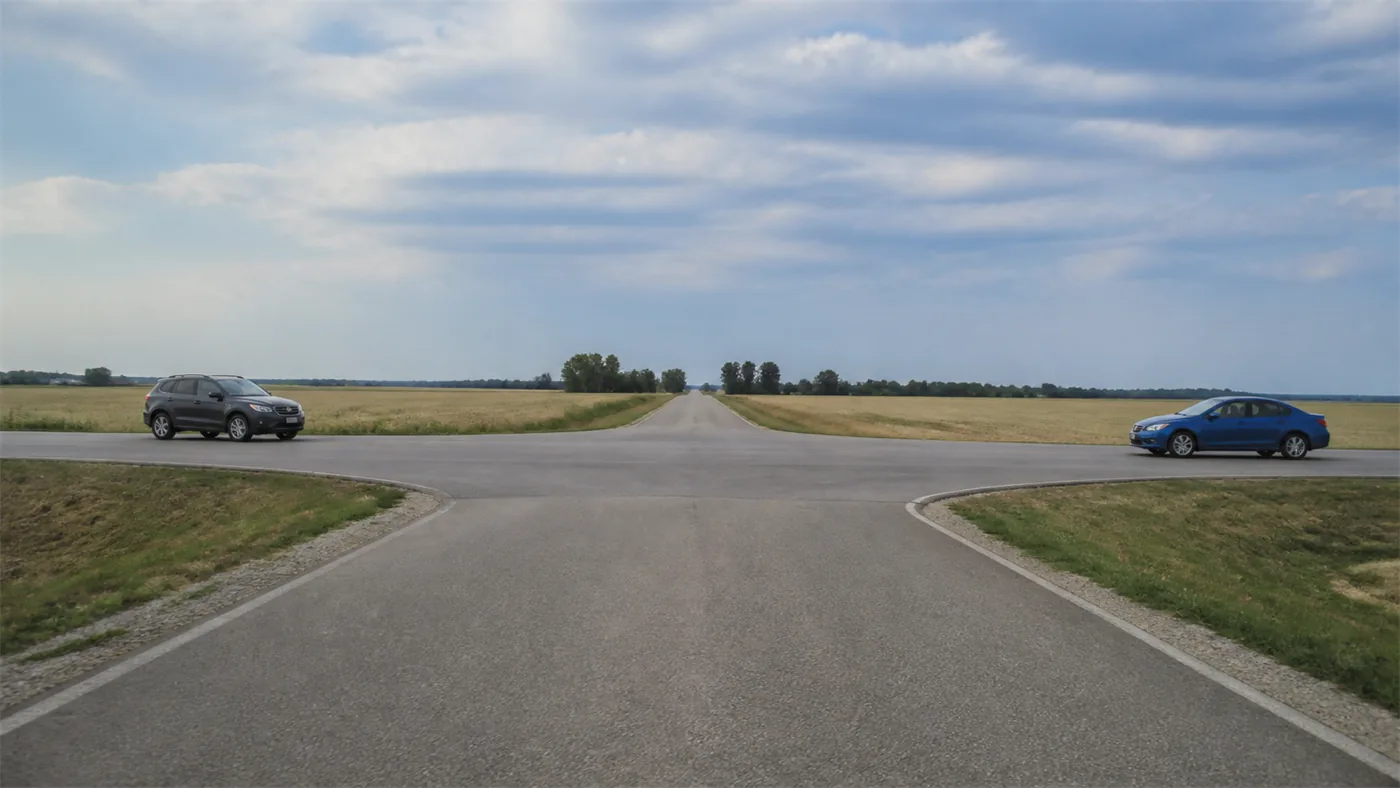
You come to a residential intersection with no stop signs, no yield signs and no lights in any direction. A car reaches it from your left at the same moment you do. What should you do?
Correct answer: Go ahead, since the driver on your left has to yield to you, but stay ready to stop if they keep coming
At an intersection with no signs or lights, the driver on the left yields to the driver on the right, so the right of way is yours. Right of way is something another driver gives you rather than something you can take, so keep watching them until you are sure they are slowing.
Alberta Driver's Guide (Government of Alberta)
Sample question 3Rules of the road
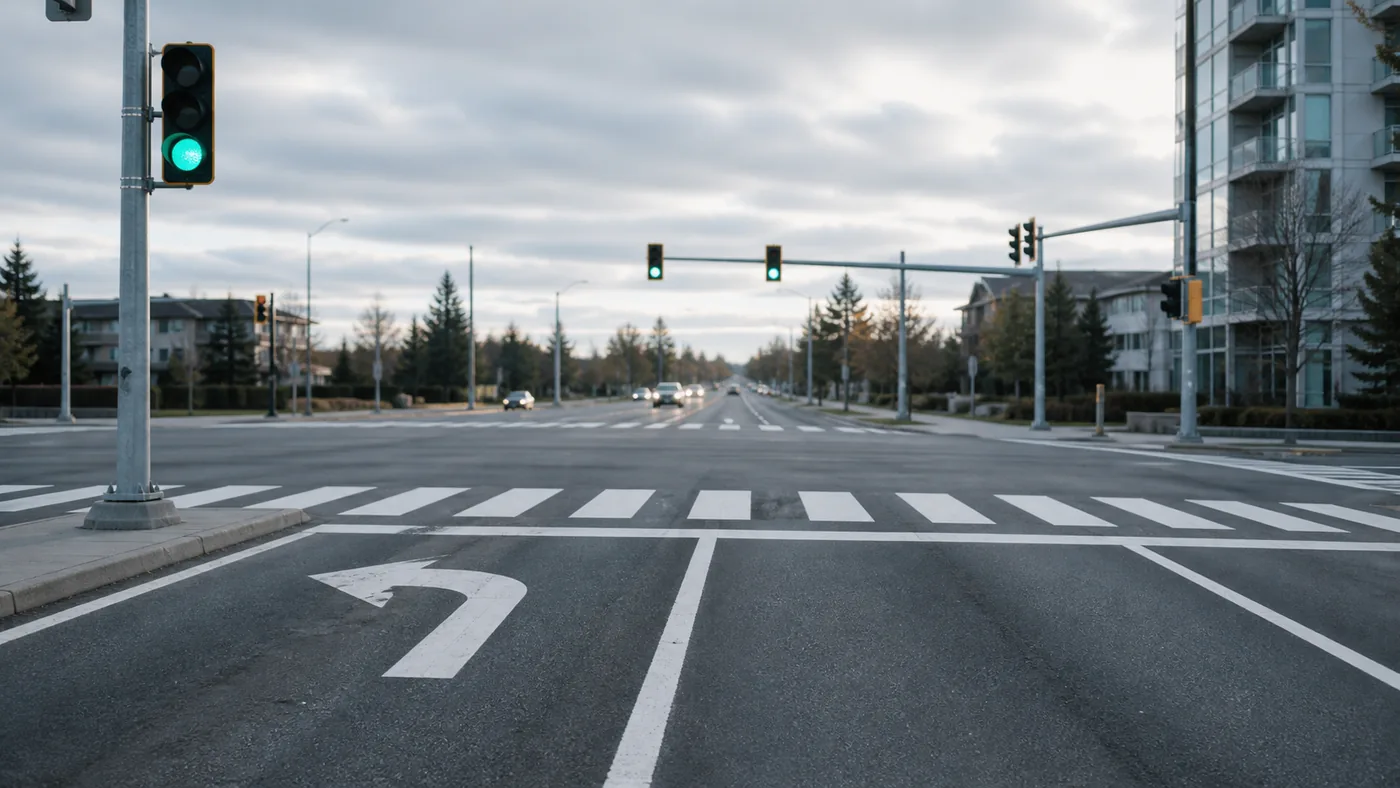
The light ahead turns amber just as you get close to the intersection, and you are near enough that stopping would mean braking hard. What should you do?
Correct answer: Carry on through at the speed you are already doing, watching the crossing traffic
Amber means stop if you can do it safely, and a stop the driver behind cannot match is not safe. The real decision point was further back, where you still had room to slow gently, so treat every green you approach as one that is about to change.
Alberta Driver's Guide (Government of Alberta)
Sample question 4Rules of the road
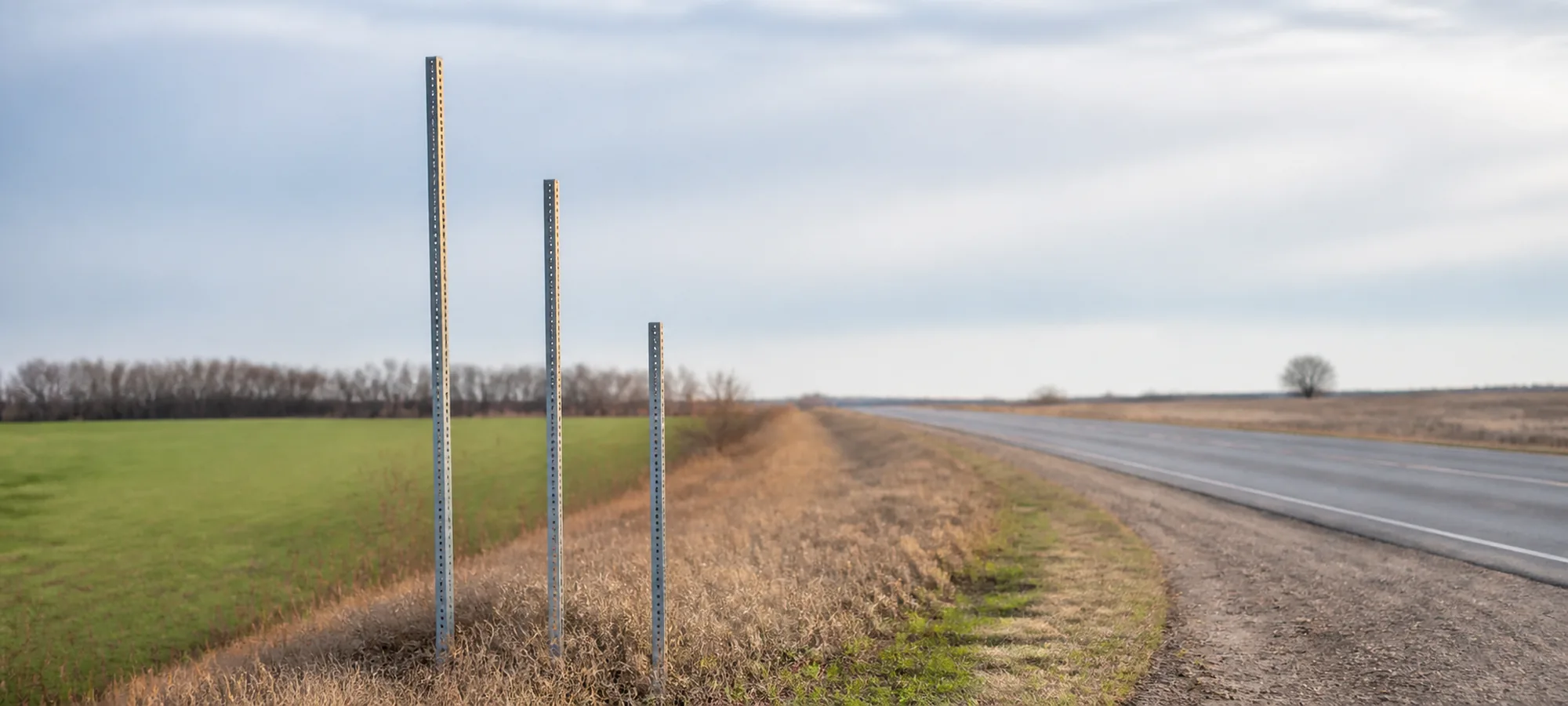
You want to check that your following distance is at least two seconds on a dry road. How do you measure it?
Correct answer: Count two seconds from when the vehicle ahead passes a fixed object until you reach the same object
Pick something beside the road, a sign or a pole, start counting when the vehicle ahead passes it, and you should not reach it before you finish. A time gap works at any speed, which is why it beats counting vehicle lengths, and two seconds is the floor for good conditions rather than a target.
Alberta Driver's Guide (Government of Alberta)
Sample question 5Rules of the road
You have checked your mirrors, signalled and seen a clear gap in the next lane. What still has to happen before you move across?
Correct answer: A quick look over your shoulder into the blind spot on that side
Every mirror set leaves an area beside and slightly behind the vehicle where a car or a motorcycle can sit unseen. A short head turn is the only thing that clears it, and it has to be short, because the road ahead of you keeps moving while you look.
Alberta Driver's Guide (Government of Alberta)
Sample question 6Rules of the road
You park facing downhill on a street with a curb. Which way do you turn the front wheels before you leave the vehicle?
Correct answer: Toward the curb
If the vehicle creeps forward, wheels turned toward the curb send it into the curb rather than out into the street. Set the parking brake as well and leave it in park, or in gear on a manual, because the wheel position is the backup and not the main hold.
Alberta Driver's Guide (Government of Alberta)
Sample question 7Rules of the road
On a two lane road, a school bus ahead of you switches on its alternating flashing red lights and stops. What must you do?
Correct answer: Stop, and so must the traffic coming the other way, until the lights stop flashing
Flashing red lights on a school bus mean children are about to cross the road, and traffic in both directions stops until the lights go off and the bus moves. The child you cannot see is the one crossing in front of the bus, which is exactly where a passing vehicle would be.
Alberta Driver's Guide (Government of Alberta)
Sample question 8Rules of the road
A driver in the graduated stage has had a single drink with dinner and feels completely normal. What does the law say about driving now?
Correct answer: Any alcohol in the body during the graduated stage means a suspension, whatever the driver feels
New drivers are held to zero alcohol for the whole graduated period, so the question is not how impaired someone feels but whether any alcohol is present at all. The rule is set that way because new drivers still spend most of their attention on the driving itself, and alcohol takes attention first.
Alberta Driver's Guide (Government of Alberta)
Sample question 9Rules of the road
What is the youngest age at which a person can hold a Class 7 learner's licence in Alberta?
Correct answer: 14
Alberta lets a learner start at 14, earlier than anywhere else in the country, with the knowledge test and a vision screening first. Starting early does not shorten the graduated stages, it only means the supervised practice starts sooner.
Alberta Driver's Guide (Government of Alberta)
Sample question 10Rules of the road
You are in a low speed collision and the other driver seems shaken but says they are fine. What must you do?
Correct answer: Stop, stay at the scene, check whether anyone is hurt, and exchange names, licence and insurance details
Stopping and staying is a duty in every collision, however small it looks, and leaving is a serious offence by itself. Injuries from a low speed impact often surface hours later, so get the details exchanged and call police when anyone is hurt or the damage looks significant.
Alberta Driver's Guide (Government of Alberta)
Other licence classes in Alberta
A few questions from each class bank. Open its page to choose a full test, a practice run, signs or one subject.
Motorcycle: Class 6 knowledge test
Sample question 1Road signs
This sign stands at the start of a resurfaced stretch of highway, and rain has just begun to fall. What does it mean for you on a motorcycle?
Correct answer: Grip on this stretch drops when it is wet, so set your speed early and keep every input gentle
The sign warns that the surface loses grip when wet, and a motorcycle has only two small contact patches to lose. Get your slowing done before the stretch, then keep throttle, brakes and steering smooth, because it is the sudden input that breaks traction. The first minutes of rain are the worst, when oil and dust lift off the road.
Alberta Driver's Guide (Government of Alberta)
Sample question 2Rules of the road
You are turning left at a green light with no arrow, and an oncoming car is approaching at a speed you find hard to judge.
Correct answer: Wait with your front wheel pointing straight ahead until you have a gap you are certain of, then turn
Oncoming traffic keeps the right of way, and closing speed is exactly what riders and drivers misjudge. Waiting with the wheel straight matters on a bike, because being hit from behind while angled would push you into the oncoming lane. Take the gap you would take in a car rather than one that depends on being quick.
Alberta Driver's Guide (Government of Alberta)
Sample question 3Rules of the road
You are riding at highway speed in a straight line and want to begin a smooth turn to the right. What actually starts the turn?
Correct answer: Pressing the right grip gently forward, which leans the bike to the right and takes it into the turn
Above walking pace a motorcycle turns by leaning, and the way you make it lean is to press the grip on the side you want to go. The front wheel points slightly away from the corner for an instant, the bike rolls into the lean, and it tracks around. Riders who freeze on the bars in a crisis lose the one input that would have steered them clear.
This sign is posted on a highway ahead of a long descent and you are driving a loaded tractor trailer. What should you do about it?
Correct answer: Slow down and select a low gear before you start down, then let the engine hold the speed
A loaded vehicle gathers speed on a grade, and holding it back on the service brakes alone heats them until they stop giving you much. Choose the gear at the top, where you still have the road speed to make the change, because once the vehicle is running away you may not get it into gear at all. Coasting in neutral throws away the one thing that was helping you.
Alberta Driver's Guide (Government of Alberta)
Sample question 2Rules of the road
You are joining a divided highway from an on ramp with a loaded trailer, and the traffic in the right lane is moving at highway speed.
Correct answer: Build what speed you can on the ramp and pick a gap far bigger than a car would need, because you accelerate slowly
The traffic already on the highway has the right of way, so joining it is your problem to solve rather than theirs. A loaded vehicle takes far longer to reach highway speed than a car, which means the gap you need is longer than the one that looks about right from the driving seat. Stopping at the end of the ramp is worse again, because you then start the whole acceleration from nothing with traffic arriving behind you.
Alberta Driver's Guide (Government of Alberta)
Sample question 3Rules of the road
Turning right at a city corner in a tractor and long trailer, you notice the trailer wheels pass much closer to the curb than the tractor wheels did.
Correct answer: This is off tracking, and it is why a long vehicle cannot follow the line a car takes
On a turn the rear wheels of a long vehicle cut inside the path taken by the front wheels, and the longer the vehicle the bigger that difference gets. It is geometry rather than a fault, and the load makes no difference to it. It is the reason a truck needs more road for a corner than a car, and the reason the space beside a turning trailer is no place for anyone to be.
Taxi and passenger transport: Class 4 knowledge test
Sample question 1Road signs
You are carrying a paying passenger through a quiet Alberta intersection when you reach this sign. What must you do before continuing?
Correct answer: Stop completely, yield to traffic and pedestrians, then proceed when safe
You must stop completely, yield to traffic and pedestrians, and move only when the intersection is safe. A full stop gives you time to see road users who may enter your path, even when the street looks quiet. Slowing without stopping is not enough, and your passenger's schedule does not change the duty to yield.
Alberta Driver's Guide (Government of Alberta)
Sample question 2Rules of the road
Your paying passenger is belted in, and you are ready to pull your taxi away from the curb into moving traffic.
Correct answer: Signal, check your mirror and over your shoulder, then wait for a gap you do not have to force
You must signal, check the mirror and blind spot over your shoulder, then wait for a safe gap before leaving the curb. This lets you find cyclists and vehicles beside the taxi and keeps moving traffic from braking or swerving to avoid you. A signal shows your intention, but it does not require another driver to yield.
Alberta Driver's Guide (Government of Alberta)
Sample question 3Rules of the road
A paying passenger asks you to turn at the next intersection, but your taxi is in a through lane. What should you do?
Correct answer: Continue straight, then use a safe legal route to return to the destination
A passenger's request does not make a last-minute lane change safe or legal. Swerving or cutting across a turn lane can surprise nearby drivers and place the passenger and other road users at risk. Continue straight, then choose the next safe legal route that brings the passenger back toward the destination.
Every question here was written against the handbook and the legislation that Alberta Transportation and Economic Corridors publishes, and every one carries the reason for its answer and the section it rests on.
Questions written
125
On road signs
65
On the rules
60
Subjects covered
11
All four figures are counted from the questions themselves when the site is built, rather than typed in by hand.
None of them is copied from another practice site, and none is generated from an unnamed source. If a question looks wrong to you, it may be wrong: say which one and what you think it should say, through the corrections route on the methodology page, and it gets checked against the source rather than argued about.
We use Google Analytics and Microsoft Clarity to see which pages help learners, and advertising cookies to keep the site free to use. Accept to allow them, or decline. How your data is handled