DriveTest Canada
  • Checked against Alberta Transportation and Economic Corridors on 2026-08-28
  • 60 practice questions

Alberta Class 6 motorcycle knowledge test

Class 6 knowledge test at a glance

Question count
30
Pass mark
25 of 30 correct
Fee
Set by the registry agent you book with. Alberta publishes a maximum rather than one provincial price.
Minimum age
16
Where it is taken
At a licensing office or testing centre
Government of Alberta, Get a Class 6 motorcycle driver licenceverified 2026-08-28

The Class 6 knowledge test has 30 questions. You need 25 correct answers to pass. The fee is set by the registry agent you book with. Alberta publishes a maximum rather than one provincial price.

  • Thirty multiple choice questions, and 25 correct to pass.
  • It is one test rather than a set of parts scored on their own.
  • You can sit it once a day, and you pay for it every time.
  • You need to be 16 and to have held at least a Class 7 learner licence for a year. A full Class 5 gets you straight to the Class 6 knowledge test and road test.
  • Registry agents are private businesses, so what you pay moves a little from one office to the next.
  • A read aloud version is offered at registry offices.
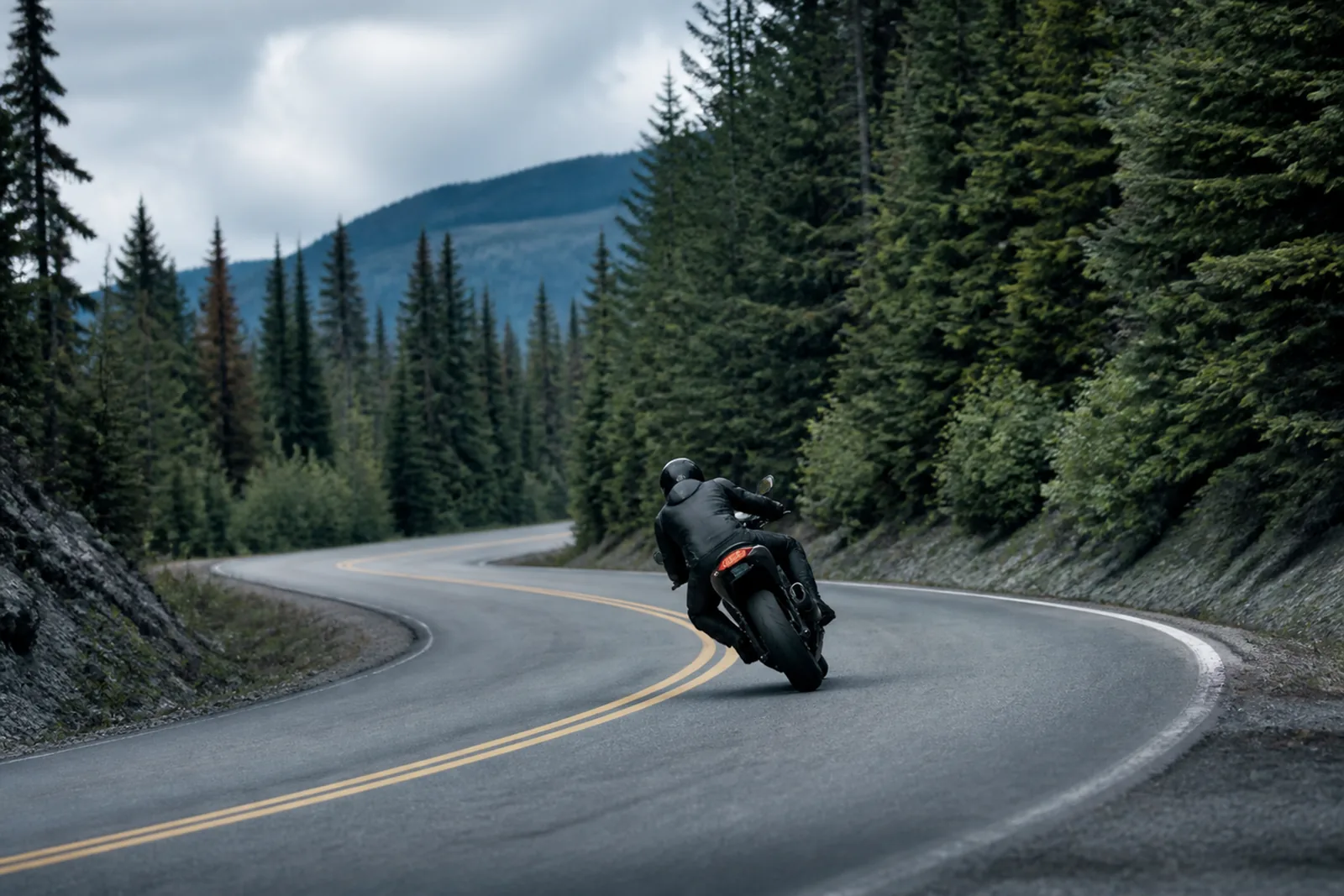
A rider in full protective gear seen from behind at a distance, leaning a motorcycle into a long bend on an empty forest road.

What the questions cover

SubjectQuestionsReading
Road signs20Lesson
Sharing the road6Lesson
Emergencies and breakdowns6Lesson
Intersections and turns5Lesson
Passing and lanes5Lesson
Weather and night driving4Lesson
Right of way3Lesson
Speed and following distance3Lesson
Parking and stopping3Lesson
Impaired and distracted driving3Lesson
Licensing and the graduated system1Lesson
Documents, fines and demerit points1Lesson

One question from the bank, in full

AlbertaRules of the road

A car pulls out of a driveway ahead of you. There is a clear gap to its left but no room to stop. What turns the bike fastest?

  1. Shifting your weight across the seat as far as it will go
  2. Turning the bars toward the gap
  3. Braking hard first and steering afterwards
  4. A firm press on the grip on the side of the gap, with the brakes released while you steer

The answer is D

A swerve is countersteering done quickly, and it needs the tires free to grip rather than busy with braking. Press the grip on the side of the gap, then press the other grip to bring the bike back upright. Braking and swerving at the same moment asks one small contact patch to do two jobs, which is how a front wheel is lost.

Alberta Driver's Guide (Government of Alberta)
How the Class 6 knowledge test passes