Alberta asks about emergencies and breakdowns in 5 of our questions, and has 1 rule here that differs from the national ones. Skids, blowouts, brake trouble, a vehicle that stops working and a collision you have to deal with. Rare events with correct answers, which is exactly why they are on the test.
About 8 minutes to read5 Alberta questions on this1 diagramLast reviewed 2026-08-27
Worth remembering
In any emergency: hands on the wheel, ease off, look where you want to go, steer smoothly.
A skid means grip has run out. Undo what caused it, then steer gently toward where you want to be.
With anti lock brakes, press firmly and keep steering; the shuddering pedal is the system working.
Blowout: hold the wheel, do not brake hard, let the speed fall, then pull off the road.
Brake failure: pump the pedal, gear down, use the parking brake gradually, and look for a place to run out of speed.
Never switch off the engine while moving; the steering can lock and the assistance is lost.
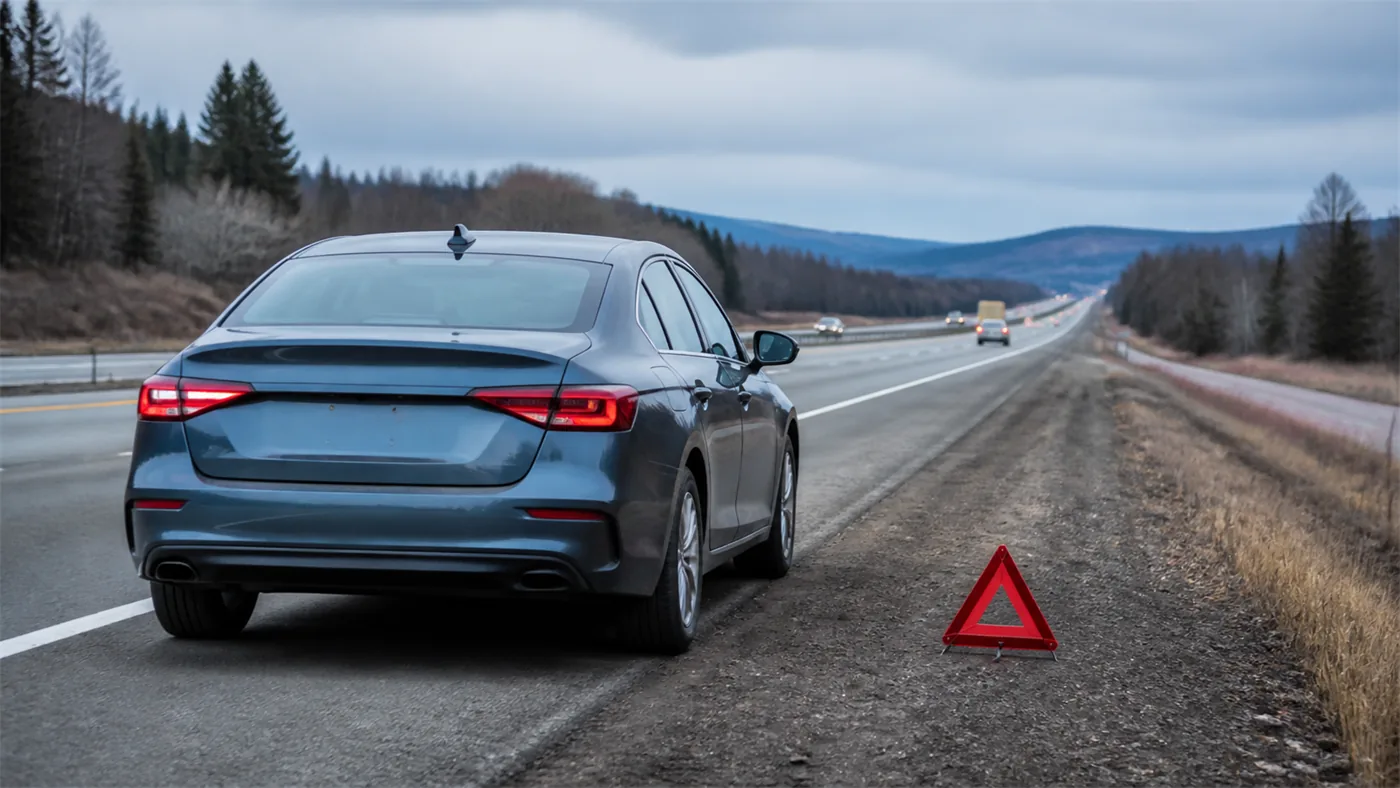
Breaking down: get clear of the traffic lane, hazard lights on, and choose a spot visible from a distance.
After a collision: stop, help anyone injured, make the scene safe, exchange details, and report as your province requires.
The rule behind all of them
Emergencies share a shape. Something changes suddenly, the instinct that arrives first is usually wrong, and the correct action is small, smooth and immediate. Slamming a control, whipping the wheel or freezing are the three failures. In almost every case the right response is to keep both hands on the wheel, ease off the accelerator rather than stamping on the brake, look at the space you want to reach rather than at the thing you are afraid of, and steer there.
Looking where you want to go is not a slogan. Your hands follow your eyes without being asked, which is why a driver who stares at the pole hits the pole. Practising the habit in ordinary driving, by looking well ahead through curves and into the gaps rather than at the obstacles, is what makes it available when there is no time to think.
Skids
A skid means the tires have run out of grip, and grip runs out for one of three reasons: braking too hard, accelerating too hard, or steering too sharply for the surface. Since the cause is nearly always something the driver did, the first response is to undo it. Ease off whatever you were doing, whether that is the brake or the accelerator, and give the tires a chance to grip again.
Then steer. If the back of the car has slid out, look where you want the car to go and steer gently in that direction, which means turning into the skid rather than against it. Be ready for the back to come back the other way and to correct again, more gently than the first time. Sudden inputs turn one skid into a worse one.
Braking depends on the vehicle. Nearly all modern cars have anti lock brakes, which allow you to press firmly and keep steering while the system pulses the brakes for you; the pedal will shudder and buzz under your foot, and that is the system working, not a fault. In an older vehicle without the system, the technique is to squeeze the brake short of locking the wheels, easing off if they lock so that the front wheels can steer again. Either way, the way to avoid needing any of this is speed and space suited to the surface.
Recovering a rear wheel skid
Your vehicle
Where it goes
Come off the throttle and the brake, look at the space you want, and steer the front wheels toward it.
When something on the vehicle fails
A tire that blows out feels like the car being pulled hard to one side, often with a loud bang. Hold the wheel firmly with both hands, do not brake hard, and let the vehicle slow on its own while you steer straight. Once the speed is down and you have control, signal, move gently onto the shoulder and stop well clear of the traffic lane. Braking hard on a blown tire is what turns a repair into a spin.
If the brakes feel soft or go to the floor, pump the pedal to try to build pressure, downshift or select a lower gear to let the engine slow the car, and apply the parking brake gradually rather than yanking it on, since a sudden parking brake can lock the rear wheels. At the same time, look for somewhere to run out of speed: an uphill slope, an empty shoulder, a stretch of open ground. Use the horn and the hazard lights to warn everyone around you.
If the accelerator sticks, shift to neutral, brake to a stop and turn the engine off once you are stopped, not while you are still moving, because switching off can lock the steering and kill the power assistance. If the engine dies while you are moving, expect the steering and brakes to become much heavier, keep hold of the wheel, and steer to the side of the road. If the headlights fail at night, try the high beams, the hazard lights and the signals to get any light at all, and pull over as soon as you safely can.
A pull off bay with the hazard lights on. Getting the vehicle to somewhere like this is the first thing the law asks of you.
Stopping at the roadside
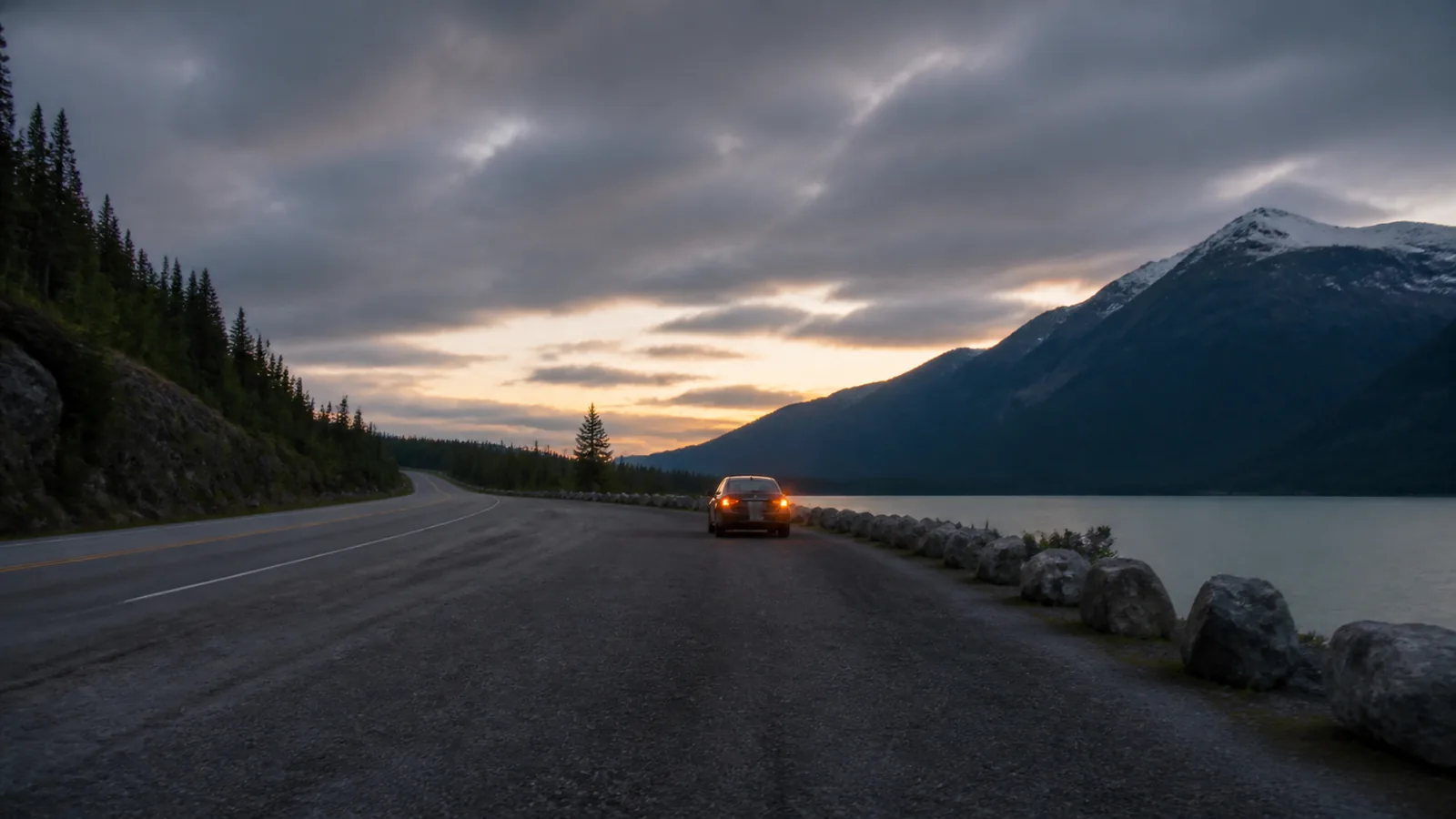
If you have to stop because of a breakdown, the aim is to get the vehicle as far away from moving traffic as you can. Signal, slow gradually, and take the shoulder or a side road or a parking area, choosing a spot where you are visible from a distance rather than just past a crest or around a bend. Turn on the hazard lights, and in daylight and darkness alike, leave the vehicle where approaching drivers can see it early.
Whether to stay in the car depends on where you are. On a busy highway, the safest place is usually out of the vehicle and behind a barrier, away from the traffic side, because a stopped vehicle on a shoulder is at risk of being struck. Where there is no safe space to stand and the weather is severe, staying belted inside with the hazard lights on is often the better choice. In a Canadian winter, that judgement also has to include the cold, which is the argument for carrying a blanket, warm clothes, a shovel and a charged phone from the first snow to the last.
Call for help rather than attempting a repair in a live lane. If you change a tire yourself, do it only on firm level ground on the side away from traffic, with the vehicle in park or in gear and the parking brake on. Never get under a vehicle held up by a jack.
If you are in a collision
Stop. Leaving the scene of a collision is a serious offence everywhere in Canada, however minor the damage looks. Check whether anyone is hurt and call for emergency help if they are, or if any vehicle cannot be driven, or if the situation is blocking traffic dangerously. Do not move a seriously injured person unless leaving them where they are puts them in more danger.
Make the scene safe. Hazard lights on, and if the vehicles can be driven and nobody is hurt, moving them out of the traffic lane is usually the right call, because a second collision into the first one is a real risk. Then exchange information with the other driver: names, addresses, licence details, plate numbers, and insurance company and policy details. Note the time, the place and the conditions, take photographs if you can, and get contact details for any witness.
Reporting duties are provincial. Every province requires a collision to be reported when someone is injured or when the damage passes a set amount, and some require reporting through a collision reporting centre within a set time. The threshold, the deadline and the place to report are all provincial figures, so look them up on your province page and keep them with your insurance papers rather than trying to remember them at the roadside.
What Alberta does differently
Everything above holds across Canada. This part does not, and it is the part a Alberta examiner can ask about.
Alberta rule
Stopped vehicles, and the distance between services
When you pass a stopped emergency vehicle, tow truck or maintenance vehicle showing flashing lights, Alberta requires you to slow to a reduced speed and, on a road with more than one lane in your direction, to move over when the move is safe. The reduced speed is posted and published by the province. Learn to recognise the situation, and let the sign supply the number.
Distances between towns are long and mobile coverage is patchy on secondary highways, so a breakdown here is a different problem than a breakdown in a city. Tell somebody your route in winter, keep the tank fuller than you would in town, and carry a blanket, boots, water and a charged phone. If you are stopped in cold weather, staying with the vehicle is normally safer than walking, and running the engine occasionally for heat is fine as long as the exhaust pipe is clear of snow.
After a collision, stop. Moving a vehicle before you have to is rarely right, though clearing it out of a live lane matters when it is drivable and it is safe. Exchange names, licence details and insurance information, and call police where anyone is hurt or where the damage looks serious. Alberta sets a reporting threshold as a dollar amount, and modern body panels reach it faster than people expect, so check the current figure with the province rather than guessing from the size of the dent.
In a skid you steer against the slide to straighten out.
What is actually true
You steer toward where you want the car to go, which is into the direction the back has slid. Ease off first, and keep every movement gentle so you do not start a second skid.
What people think
The brake pedal is shuddering, so the brakes are broken.
What is actually true
That pulsing is the anti lock system working. Keep firm pressure on the pedal and steer; releasing it because it feels wrong throws away the one thing helping you.
What people think
Brake hard the moment a tire blows.
What is actually true
Hard braking on a blown tire unbalances the car and can spin it. Hold the wheel, keep it straight, let the speed come down, then pull off.
What people think
The damage was small, so we can sort it out without reporting anything.
What is actually true
Every province requires a report when anyone is injured or when damage passes a set amount, and some require it at a collision reporting centre within a deadline. Check the figures for your province in advance.
What people think
Staying in the car on the shoulder is always safest.
What is actually true
On a busy highway a stopped vehicle can be struck, so being behind a barrier away from the traffic side is often safer. Weather, location and how much room you have all change the answer.
Check yourself
Three questions from the Alberta bank on emergencies and breakdowns. Answer them in your head first, then open the answer to see the rule it comes from.
Emergencies and breakdowns1 of 3
You are in a low speed collision and the other driver seems shaken but says they are fine. What must you do?
AStop, stay at the scene, check whether anyone is hurt, and exchange names, licence and insurance details
BExchange phone numbers and move on if both vehicles still drive
CLeave once you have photographed both vehicles
DWait for police only if the other driver asks you to
Show the answer
The answer is A. Stop, stay at the scene, check whether anyone is hurt, and exchange names, licence and insurance details
Stopping and staying is a duty in every collision, however small it looks, and leaving is a serious offence by itself. Injuries from a low speed impact often surface hours later, so get the details exchanged and call police when anyone is hurt or the damage looks significant.
Alberta Driver's Guide (Government of Alberta)
Emergencies and breakdowns2 of 3
The back of your vehicle slides out to the right on an icy corner. What do you do with the steering and the pedals?
ABrake hard and hold the wheel straight
BAccelerate to pull the vehicle straight again
CSteer the opposite way to the slide and brake gently
DCome off both pedals, look where you want to go and steer that way
Show the answer
The answer is D. Come off both pedals, look where you want to go and steer that way
Braking or accelerating in a skid uses up the little grip the tires still have, so the first move is to stop asking anything of them. Your hands follow your eyes, so looking down the road where you want to end up produces about the right amount of steering without you having to think about it.
Alberta Driver's Guide (Government of Alberta)
Emergencies and breakdowns3 of 3
You press the brake pedal on a long downhill and it sinks to the floor with almost no effect. What is the order of things to try?
ASwitch the engine off to slow the vehicle down
BPull the parking brake fully on at once
CPump the pedal, shift to a lower gear, then apply the parking brake gradually while steering for a safe place to stop
DSteer into the ditch immediately
Show the answer
The answer is C. Pump the pedal, shift to a lower gear, then apply the parking brake gradually while steering for a safe place to stop
Pumping can rebuild pressure in the braking system, and a lower gear puts the engine to work holding the vehicle back on the hill. The parking brake goes on slowly, because pulling it hard can lock the rear wheels, and switching the engine off costs you the power steering you need to steer out of it.
Alberta Driver's Guide (Government of Alberta)
Now go and answer some questions
The Alberta bank holds 5 questions on emergencies and breakdowns. Answering them now, while the lesson is fresh, is how you find the parts that only felt clear.
We use Google Analytics and Microsoft Clarity to see which pages help learners, and advertising cookies to keep the site free to use. Accept to allow them, or decline. How your data is handled