Rules of the road
Right of way, and the cases people get wrong
Six situations that account for most right of way mistakes, each one drawn out. Who goes first at a four way stop, what a green light does not give you, and when a median changes the answer.
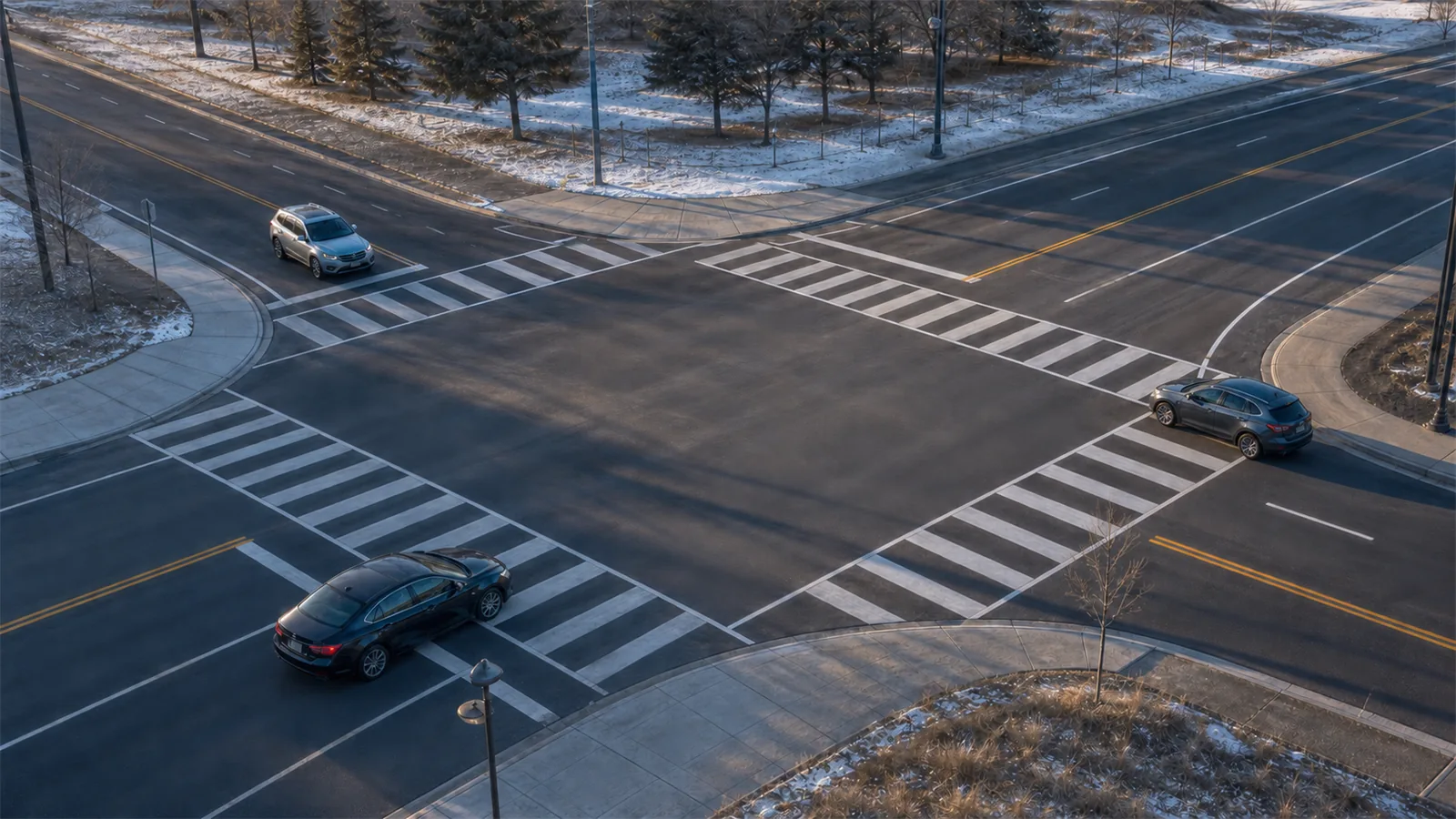
Which right of way situations people actually get wrong, drawn out one at a time, rather than a restatement of the rule in the handbook.
Right of way questions are where confident drivers lose marks. The rule itself is short enough to learn in a minute, and the trouble is never the rule. It is the handful of situations where two rules seem to point at different answers, or where a driver has quietly rewritten the rule into something more comfortable.
This guide takes the six situations that cause most of the errors and draws each one. If you can talk through the pictures below without hesitating, the right of way questions on any provincial knowledge test stop being the hard ones.
Right of way is given, not taken
Start with the phrasing, because it is the source of half the mistakes. The rules do not hand anybody a right to proceed. They say who has to yield. Nobody is ever granted permission to drive into a space that is not clear.
That distinction is not word play. It is why a driver who was legally entitled to go, and went into a collision that was plainly developing, still gets a share of the blame. It is also the answer to a large family of test questions: when the options include one where you insist on your turn, that option is almost never correct.
So the working version is this. Ask who is required to yield. If it is you, yield. If it is not you, proceed only when the other driver has actually done what the rule requires of them.
- Stop
- Yield
The four way stop, in the order people actually arrive
Every driver stops behind the line, and then the order is the order of arrival: first to stop is first to go. That much everyone knows. The mistake lives in the tie, and ties happen constantly, because four drivers rolling up to a quiet crossroads rarely arrive in a tidy sequence.
When two drivers stop at the same moment, each of them looks to their own right. The driver with nobody on their right goes. The driver who has a car on their right waits for it. Work it around the intersection and the tie resolves itself without anyone waving.
The other half of the error is the stop itself. Slowing to walking pace and creeping through is not a stop, and at a four way stop it destroys the only thing the system runs on, which is a visible moment where everyone can see who stopped when. Stop behind the line, come to rest, then move.
Who goes first at a four way stop
- Your vehicle
- Another vehicle
- Where it goes
No signs, no lights, and no automatic answer
Quiet residential crossroads often have nothing at all: no stop sign, no yield sign, no signal on any approach. Plenty of drivers have never consciously thought about what governs those, and they treat the wider road as the main one, which is not a rule.
The rule is the same tie breaker as the four way stop, with one extra piece. Whoever is clearly there first goes first. When two drivers arrive together, the one on the right goes and the other yields. Nothing about road width, road surface or which road looks more important changes it.
The part that matters more than the rule is the approach. Because there is no sign telling the other driver to stop, and no way to know they have worked any of this out, you have to arrive slowly enough to stop. A right of way you have to defend at speed is worth nothing.
An intersection with no signs or lights
- Your vehicle
- Another vehicle
- Where it goes
The left turn: a green light is not permission to turn
This is the single most misread situation in driving. A green light means the intersection is open to you. It does not mean the turn is yours. Turning left across oncoming traffic requires a gap, and the gap is the only thing that gives you the turn.
The gap has to be long enough to complete the turn without the oncoming driver having to slow down. Not long enough to start the turn, long enough to finish it. Judging that is the skill, and it is why so many road test failures and so many serious collisions happen inside this one manoeuvre.
While you wait, wait properly: move into the intersection past the stop line, and keep the front wheels pointing straight ahead. Wheels turned early feel efficient and are the reason a rear end collision at a left turn becomes a head on one, because the car is pushed into the oncoming lane instead of straight forward.
When the light turns amber with you still waiting in the intersection, you complete the turn as soon as oncoming traffic clears. You are already committed, and staying there is worse than finishing.
Turning left across oncoming traffic
- Your vehicle
- Another vehicle
- Where it goes
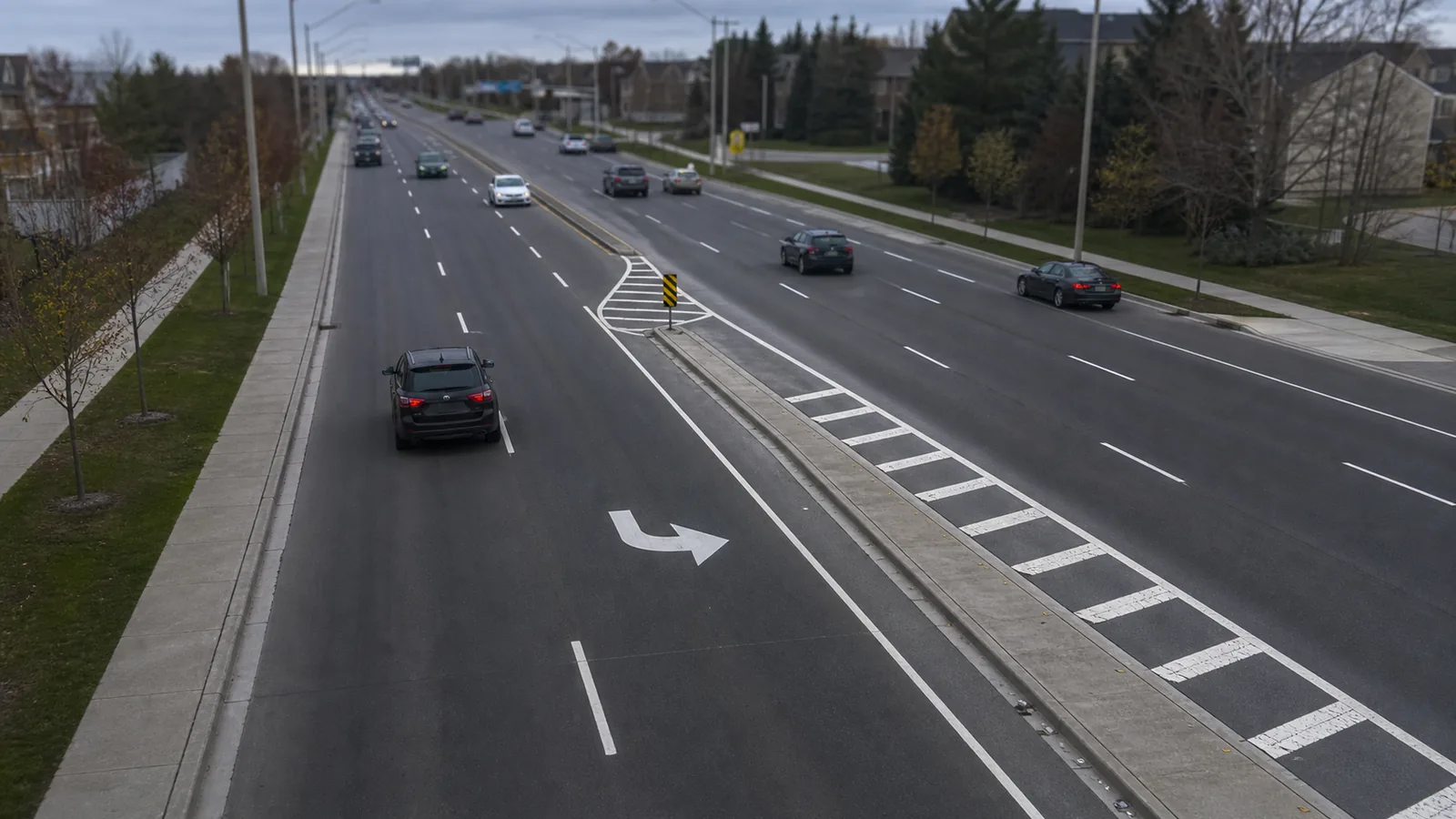
The school bus, and the median that changes the answer
Red lamps flashing on a stopped school bus stop traffic in both directions on an undivided road. Behind the bus, alongside it, coming the other way: everyone stops, and everyone stays stopped until the lamps go off and the stop arm folds back.
The exception is the one people get wrong, and it is worth learning exactly. On a road divided by a raised median or a physical barrier, traffic on the far side of that divider carries on. The reason is not a technicality: no child is going to cross a median to reach the bus, so the far side is not part of the danger.
A painted line down the middle of the road is not a median. Paint separates lanes, it does not separate roadways. If paint is all that lies between you and the bus, you stop. That distinction is exactly the kind of detail a knowledge test question is built on.
Stopping for a school bus
- Your vehicle
- Another vehicle
- Where it goes
Emergency vehicles, and the wrong place to stop
When an emergency vehicle approaches with its lamps on, you make room and stop. Pull as far to the right as you safely can, come to rest, and stay there until it has gone past. Where nothing divides the road, traffic coming the other way does the same.
The mistake is stopping in the wrong place. A driver who is inside an intersection when the siren registers, and stops there, has parked in the one space the emergency vehicle most needs. Drive out of the intersection first, then pull over.
Two smaller errors are worth naming. Do not brake hard: the driver behind you is watching the emergency vehicle, not your bumper. And do not pull out behind it to use the gap it made, because the traffic on either side is still moving back into that space.
Making room for an emergency vehicle
- Your vehicle
- Another vehicle
- Where it goes
- The point they meet
People on foot outrank all of it
Every rule above settles a dispute between vehicles. None of them applies to a person crossing on foot. A pedestrian in a crosswalk, or crossing the road you are turning into, goes before you regardless of what the vehicle rules say about your turn.
That includes the case drivers dislike most: you have a green light, you are turning right, and someone steps off the kerb into the crosswalk you are turning across. They have it. Your green does not compete with them.
It also includes people who are not where you expected them. A pedestrian crossing sign is telling you people will be on the road in a place with no signal to protect them, which is exactly when a driver who is only watching for cars misses them.
- Pedestrian crossing ahead
- School crossing
Worth remembering
- The rules say who must yield. Nobody is ever given a right to drive into a space that is not clear.
- Four way stop: first to stop goes first, and in a tie the driver on the right goes.
- No signs and no lights: whoever is clearly there first goes, then the driver on the right.
- A green light does not give you a left turn. A gap long enough to finish the turn does.
- Red lamps on a school bus stop both directions, unless a raised median separates you. Paint is not a median.
- Never stop inside an intersection for an emergency vehicle. Clear it first, then pull right and stop.
Questions people ask
Who goes first at a four way stop?
The first driver to come to a complete stop. If two drivers stop at the same moment, the one on the right goes and the other yields. Work it around the intersection and every tie resolves.
Who has the right of way at an intersection with no signs or lights?
Whoever arrives clearly first. When two drivers arrive together, the driver on the right goes. Road width does not matter, and neither does which road looks like the main one.
Can I turn left on a green light?
Only when there is a gap in oncoming traffic long enough to finish the turn without the oncoming driver having to slow. The green opens the intersection to you, it does not give you the turn.
Do I have to stop for a school bus on a divided road?
Traffic behind the bus stops. Traffic on the far side of a raised median or physical barrier does not have to. A painted centre line is not a median, so if paint is all that separates you, you stop.
Where should I stop for an emergency vehicle?
As far right as you can safely get, clear of the intersection. If you are inside an intersection when you notice it, drive out of the intersection first and then pull over. Stay stopped until it has gone past.