Rules of the road
Roundabouts, lane by lane
Which lane to take, when to yield, when to signal, and the one conflict that causes most roundabout collisions. Drawn out rather than described.
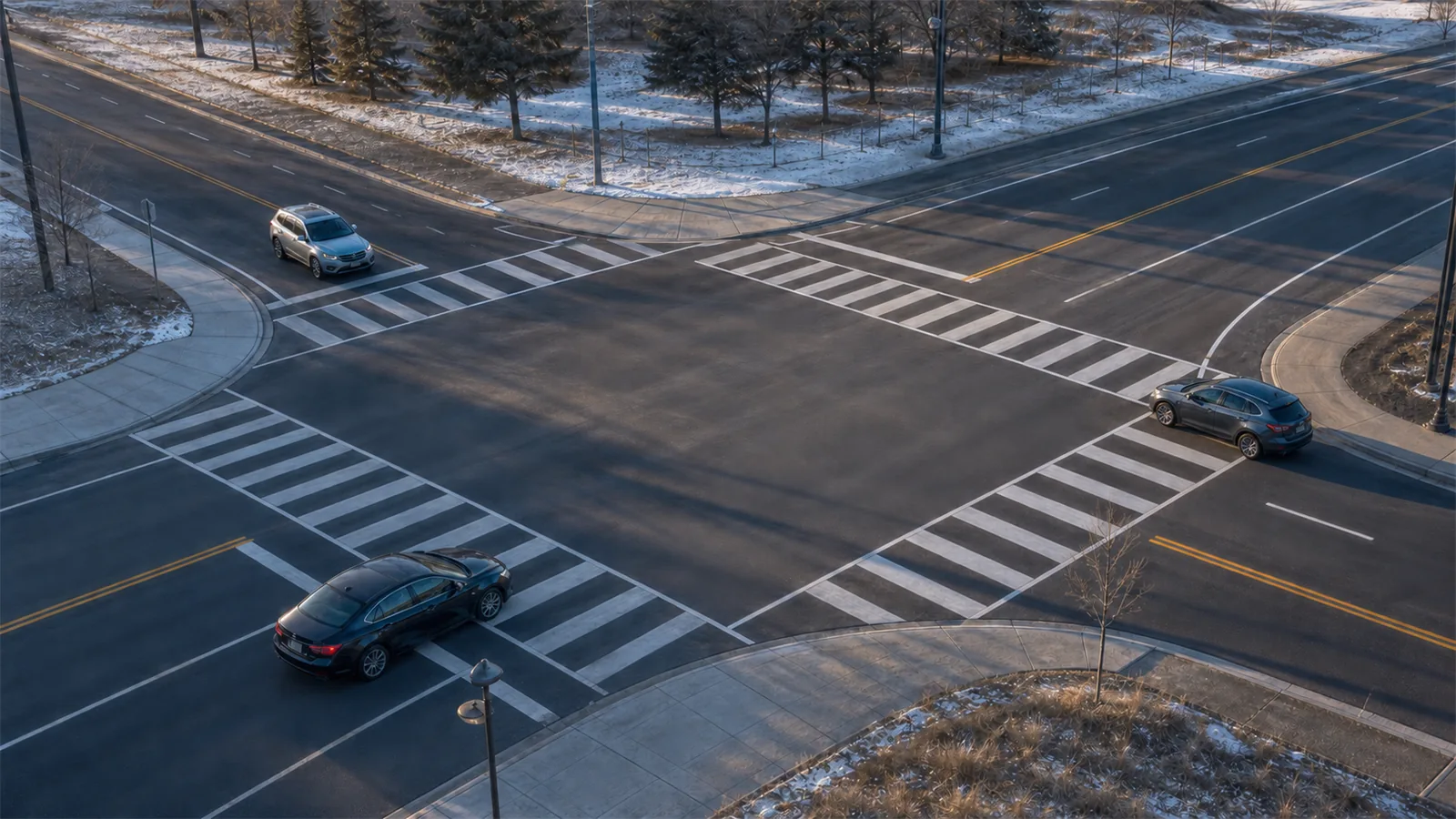
Which lane to choose on the approach to a roundabout and what to do inside it, drawn out, including the exit conflict that catches drivers who did everything else right.
Roundabouts appeared on Canadian roads faster than most drivers learned them, so a lot of people are working from instinct. That shows up in two ways: hesitating at an empty entry, and treating the circle as if it were a lane you can move around in.
Neither is necessary. A roundabout runs on three decisions, made in a fixed order: pick a lane before you get there, yield at the line, then signal before the exit. Get those in the right order and the rest of it is just steering.
What a roundabout actually replaces
A roundabout takes an intersection where traffic crosses at right angles and turns it into one where traffic merges at a shallow angle and travels the same way around a central island. Everyone goes counter clockwise, so the island stays on your left the whole way round.
That single change removes the two conflicts that hurt people most at a normal intersection: the left turn across oncoming traffic, and the vehicle arriving at speed from the side. Nobody crosses anybody else at a roundabout, they join and leave a stream.
It also means there is no signal telling you what to do, which is the part that unsettles new drivers. The decisions are yours, taken in order, every time.
- Roundabout
- Yield
Yield at the line, and only at the line
Traffic already going round the island has the right of way. You wait at the yield line for a gap, then join. If the roundabout is empty, you do not have to stop at all: yield means give way, not come to rest.
Once you are in the circle, you are the traffic others yield to. Do not stop inside a roundabout to let a waiting driver in, however polite it feels. The driver behind you is looking to their left for a gap, not at your brake lights, and a stopped car in the circle is where the rear end collisions happen.
Judge the gap on speed, not on distance. Traffic in a small roundabout is moving slowly, so the gap you need is shorter than it looks, and the error you see most often is not an unsafe entry, it is safe gaps refused one after another with traffic building up behind.
Choosing a lane at a roundabout
- Your vehicle
- Another vehicle
- Where it goes
The lane is chosen before the yield line
On a roundabout with more than one lane on the approach, the lane you choose decides which exits you can take, and you choose it before you reach the yield line. There is no lane changing inside the circle.
The general pattern is the same as a normal intersection. The right hand lane serves the first exit, and straight ahead where the markings allow it. The left hand lane serves the far exit and the turn back the way you came. Where painted arrows or an overhead sign say something different, they win, because some roundabouts are marked for their own local traffic pattern.
If you find yourself in the wrong lane inside the circle, do not correct it there. Carry on round to an exit your lane allows, leave, and come back. Another lap costs you almost nothing. Crossing a lane inside a roundabout is how the exit collision happens.
Signal right, just before your exit
You do not signal on the way in. Once you are round to the exit before the one you want, signal right and stay in your lane until you leave. That timing gives the driver waiting at the next entry the information they need at the moment they need it.
Signalling too early tells a waiting driver you are leaving at their entry, they pull out, and you are still coming. Signalling too late tells them nothing at all. Late is safer than early, which is why the exit before yours is the rule of thumb.
Cancel the signal once you are out. A car leaving a roundabout with a signal still blinking is a car nobody can predict.
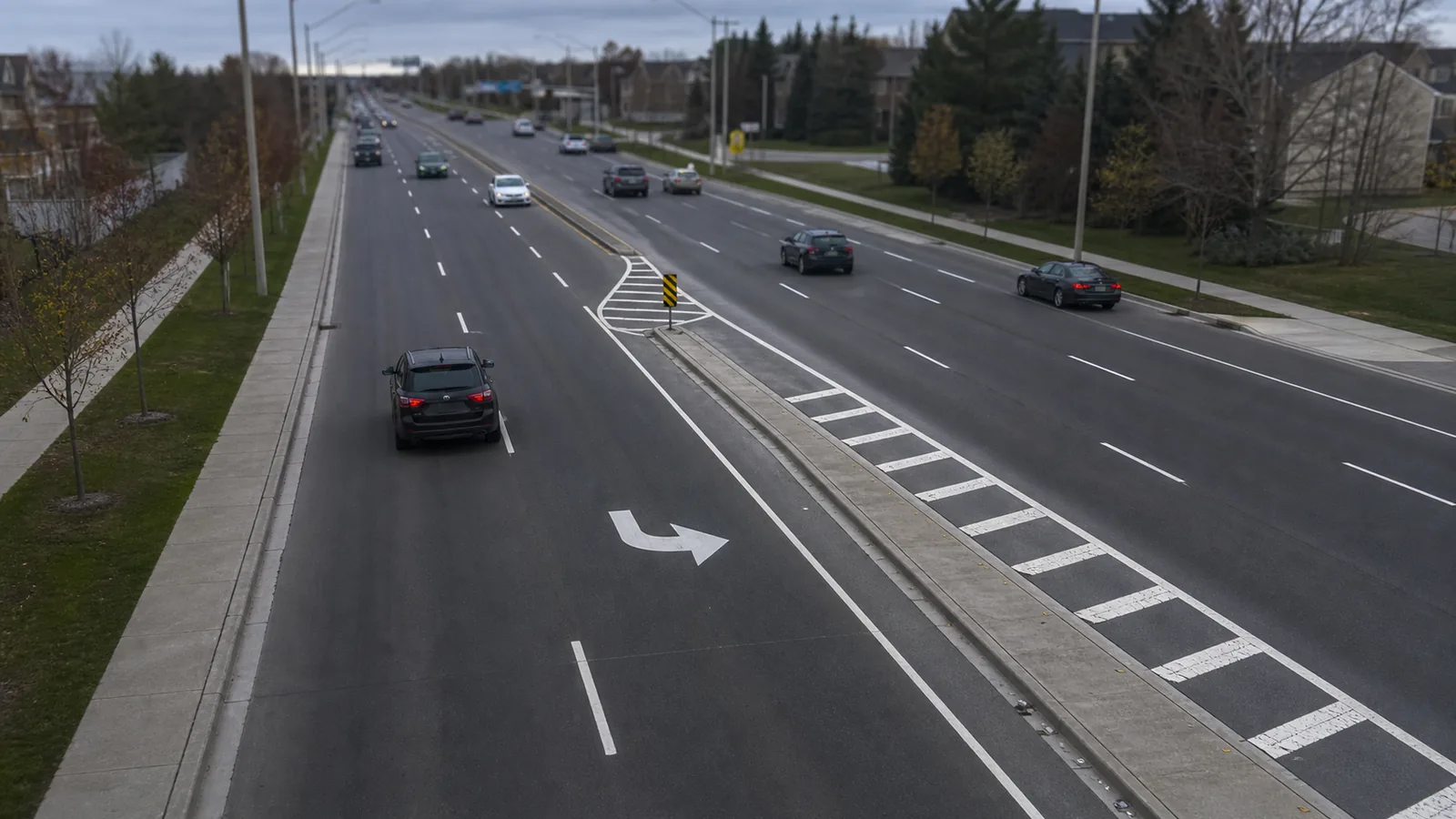
The conflict that causes most roundabout collisions
Picture two vehicles side by side inside a two lane roundabout. You are in the right hand lane, going to the next exit. The other driver is in the left hand lane, and they decide to take the same exit. Their path crosses yours, and they are on your left where you are least likely to be looking.
This is the one to defend against, because you can do everything correctly and still be hit. Watch the vehicle beside you rather than assuming it, and hold back slightly rather than sitting level with it through the circle. Two vehicles side by side approaching the same exit is a situation with one outcome unless somebody yields.
The same reasoning applies when you are the one in the left lane. If your exit is coming up and there is a vehicle on your right, you cannot take it. Go round again.
Large vehicles, cyclists and people on foot
A truck or a bus cannot follow the same line you do. Many roundabouts have a raised apron around the central island specifically so a long vehicle can track over it, and a large vehicle may need both lanes to get round. Give it the room it takes and do not try to pass it inside the circle.
A cyclist has two legitimate choices at a roundabout: take the lane and travel as a vehicle, or leave the road and use the crossings as a person on foot. Both are correct. A cyclist holding the middle of the lane is not in your way, they are making themselves visible where a driver looking for a car would otherwise miss them.
Crossings sit on the approach and exit arms, set back from the circle. When you leave a roundabout you are crossing a place where people cross on foot, often while still looking left for traffic. Come out of a roundabout ready to stop, not accelerating away from it.
Worth remembering
- Traffic already in the circle has the right of way. Yield at the line, and do not stop inside the roundabout.
- Choose your lane before the yield line. There is no lane changing inside a roundabout.
- Right lane for the first exit and usually straight ahead, left lane for the far exit and the turn back, unless the markings say otherwise.
- No signal on the way in. Signal right once you pass the exit before yours, and cancel it when you are out.
- The vehicle beside you in the circle is the one to watch. Two cars aiming at the same exit only works if one yields.
- In the wrong lane inside the circle, go round again rather than crossing a lane.
Questions people ask
Do you have to stop at a roundabout?
Only if you need to. The entry is a yield, not a stop, so if there is no traffic coming round you can drive straight in. What you must not do is stop inside the circle.
Which lane do I use at a two lane roundabout?
Pick it before the yield line. The right lane generally serves the first exit and straight ahead, and the left lane serves the far exit and the turn back the way you came. Painted arrows and signs on the approach take priority over the general pattern.
When do you signal in a roundabout?
Signal right after you pass the exit before the one you want, and cancel it once you are out. Signalling on the way in tells waiting drivers the wrong thing.
What if I miss my exit in a roundabout?
Carry on round and take it next time. Crossing a lane inside the circle to reach an exit is the manoeuvre that causes most roundabout collisions.
Now answer some questions on it
Read next
Right of way, and the cases people get wrong
Six situations that account for most right of way mistakes, each one drawn out. Who goes first at a four way stop, what a green light does not give you, and when a median changes the answer.
Road sign shapes and colours, and how to read a sign you have never seen
Shape, colour and symbol carry the meaning before you read a word. Learn the pattern once and you can work out an unfamiliar sign before you have driven past it.