Free M1 practice test 2026: 60 questions with answers
For the real M1 test, 80% total score to pass. This free practice hub has 60 questions with the answer, an explanation and a citation. Source: DriveTest, Knowledge Tests, checked 2026-09-15.
The number beside each subject is how many questions we have written on it for Ontario motorcycle. A subject appears here once there are enough of them to be worth sitting down with.
A sample of 10 questions from the M1 test bank, spread across its subjects and shown in full before you start.
Sample question 1Road signs
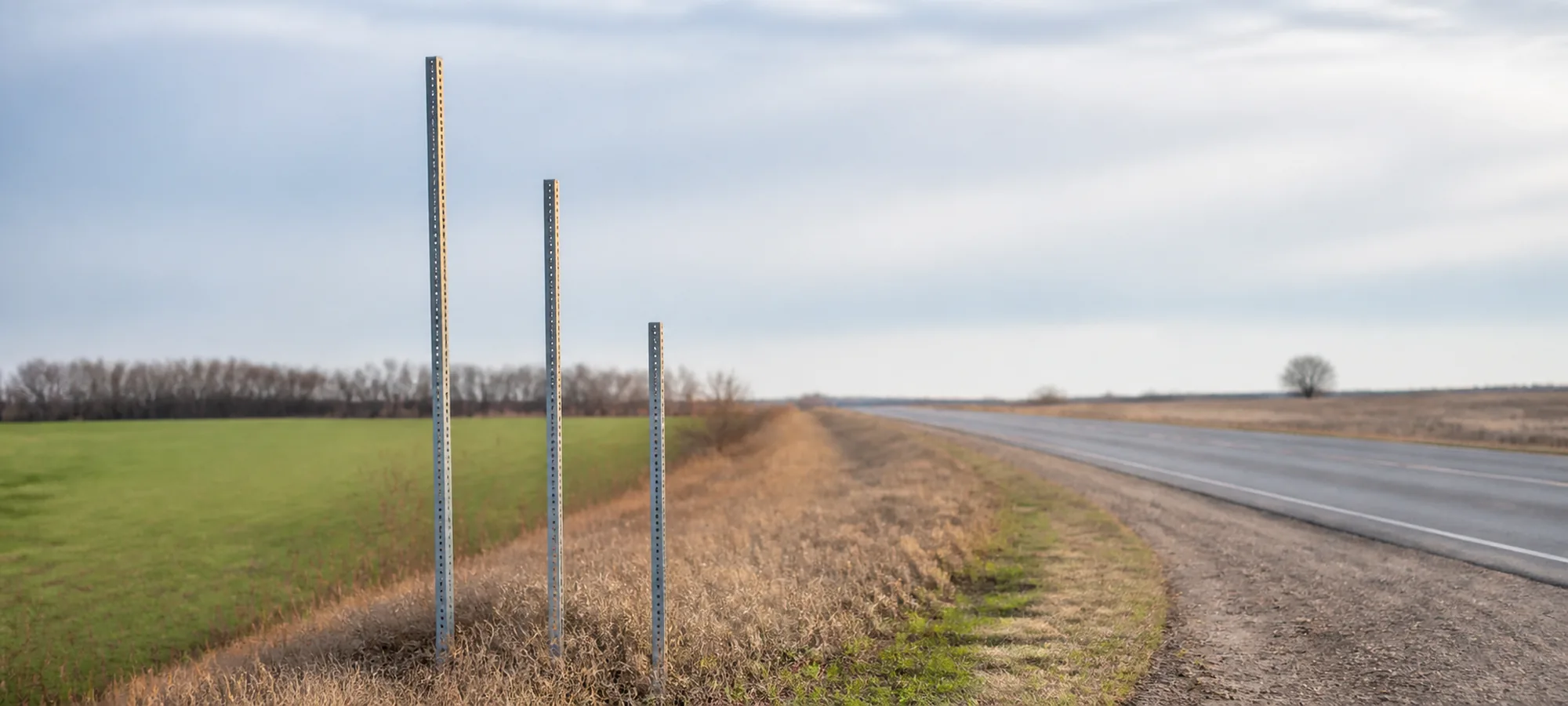
This sign faces you on a damp afternoon, just before a stretch of resurfaced road. What does it ask of a rider?
Correct answer: Slow down before you reach it, then keep the bike upright and your inputs gentle
A motorcycle loses grip at one of two small contact patches and has nothing to catch it when that happens. Slowing before the low grip section, then holding a steady throttle with the bike as upright as the road allows, keeps the demand on both tires low while the surface has little to give.
Highway Traffic Act (Ontario)
Sample question 2Rules of the road
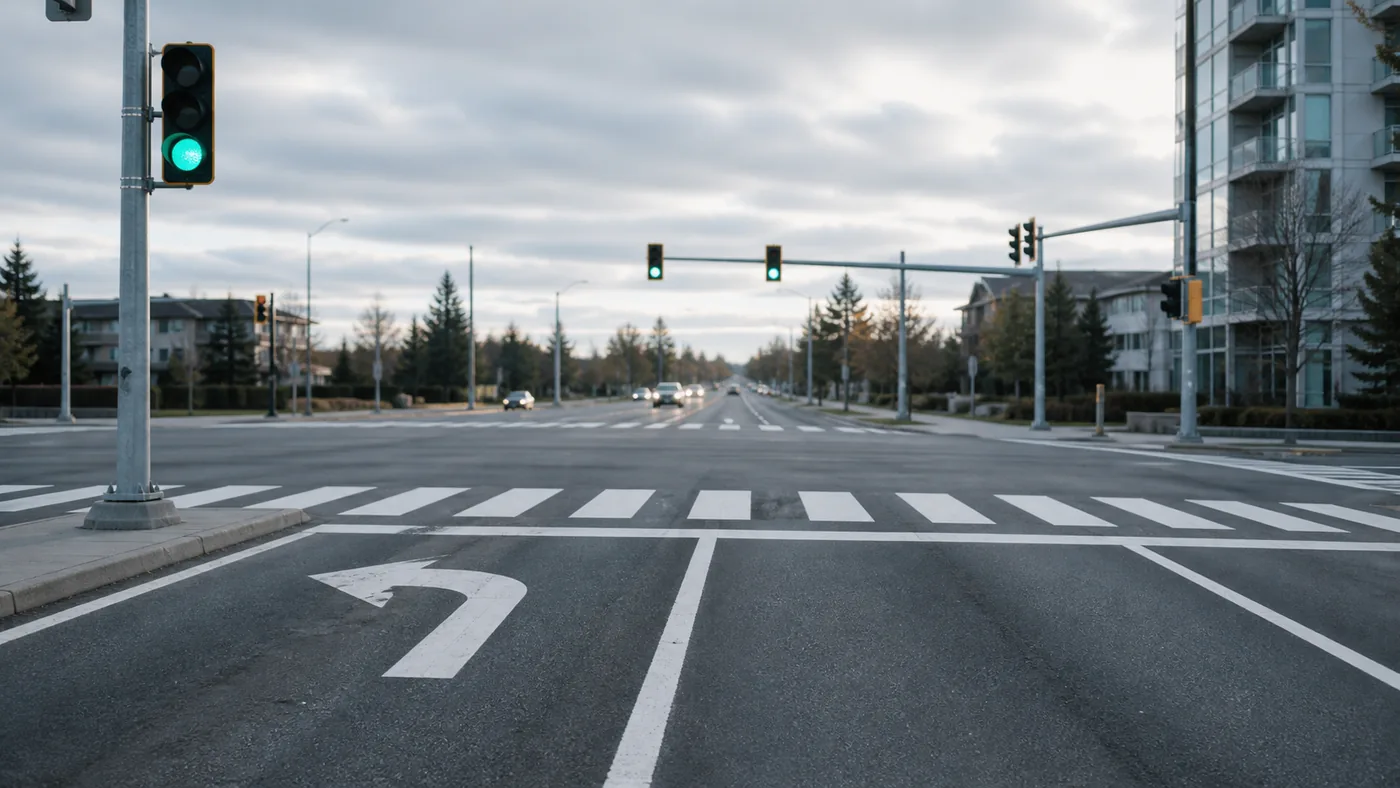
You are riding straight through on a green light. An oncoming driver is waiting to turn left across your path and is looking directly at you.
Correct answer: Slow, cover the brakes and keep a way out, because the driver may still turn across you
A motorcycle is a narrow shape with no width to judge, so drivers read it as further away and slower than it really is. A driver can look straight at you and still decide the gap belongs to them, which is why the answer is speed in hand and an escape path rather than trust in the look.
Highway Traffic Act (Ontario)
Sample question 3Rules of the road
You are riding at road speed on an open road and need to change direction to the right for a bend. What actually turns the motorcycle?
Correct answer: A light forward press on the right handgrip, which leans the bike to the right
Above walking pace a motorcycle turns by leaning, and the fastest way to make it lean is to steer the front wheel very slightly the other way for an instant. Press the right grip and the bike falls into a right lean. Riders who never learn this find they cannot make the machine go where they want when a corner tightens.
Highway Traffic Act (Ontario)
Sample question 4Rules of the road
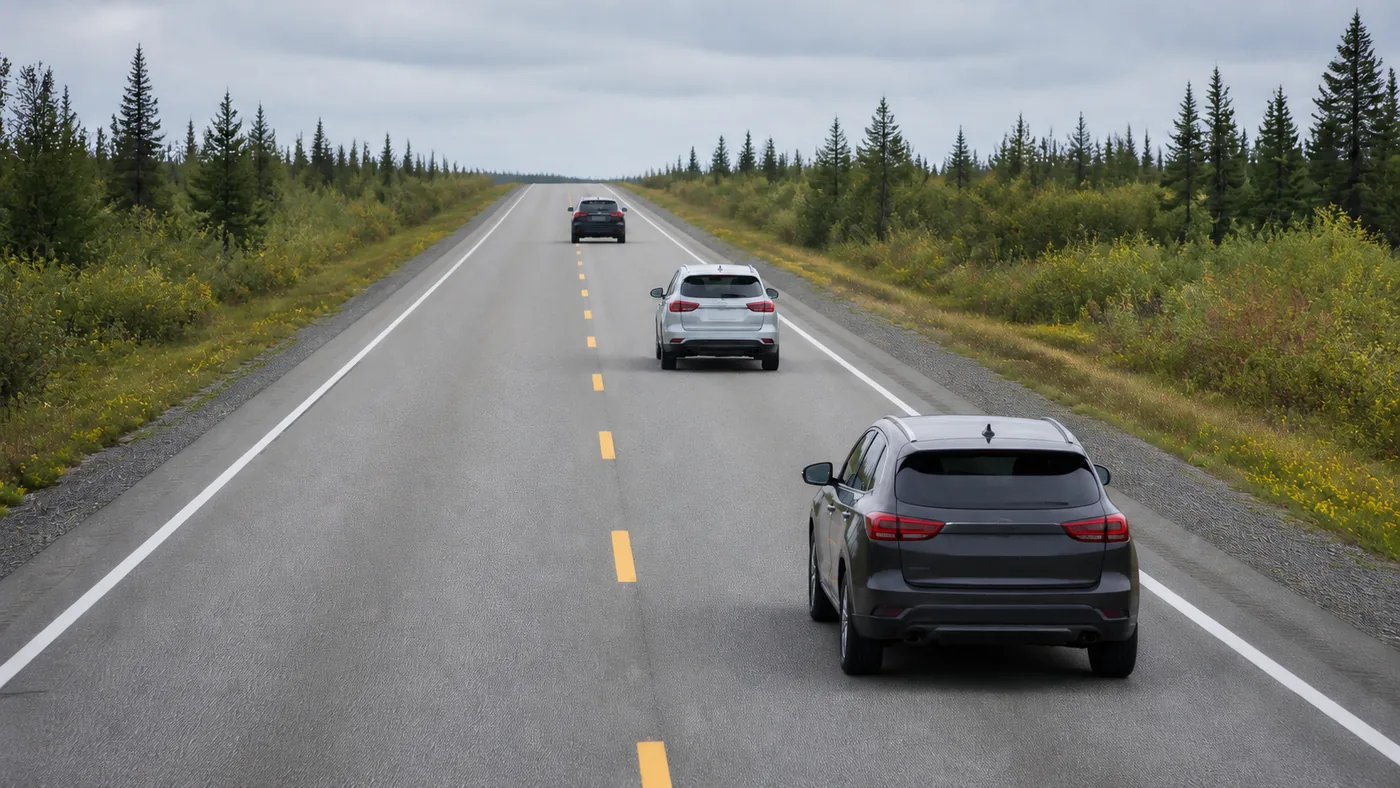
You are riding behind a car at city speed on a dry road, sitting in the same part of the lane as the car ahead.
Correct answer: Leave more space than a car would, and offset your position so you can see past it
A bike does not usually stop shorter than a modern car, and the rider needs to read the surface as well as the traffic, which the vehicle ahead is hiding. More space gives you time to spot the pothole or the diesel spill, and an offset position gives you the view to spot it early.
Highway Traffic Act (Ontario)
Sample question 5Rules of the road
You are riding a straight, dry city street in moderate traffic. Where in the lane should you normally sit?
Correct answer: In whichever part of the lane opens up your view and keeps you easiest to see, changing it as conditions change
A lane gives a rider three usable strips and none of them is right all the time. The one you want opens up your view, keeps you off the oily middle and puts you where the drivers who matter are already looking, so it moves with the traffic, the surface and the next corner.
Highway Traffic Act (Ontario)
Sample question 6Rules of the road
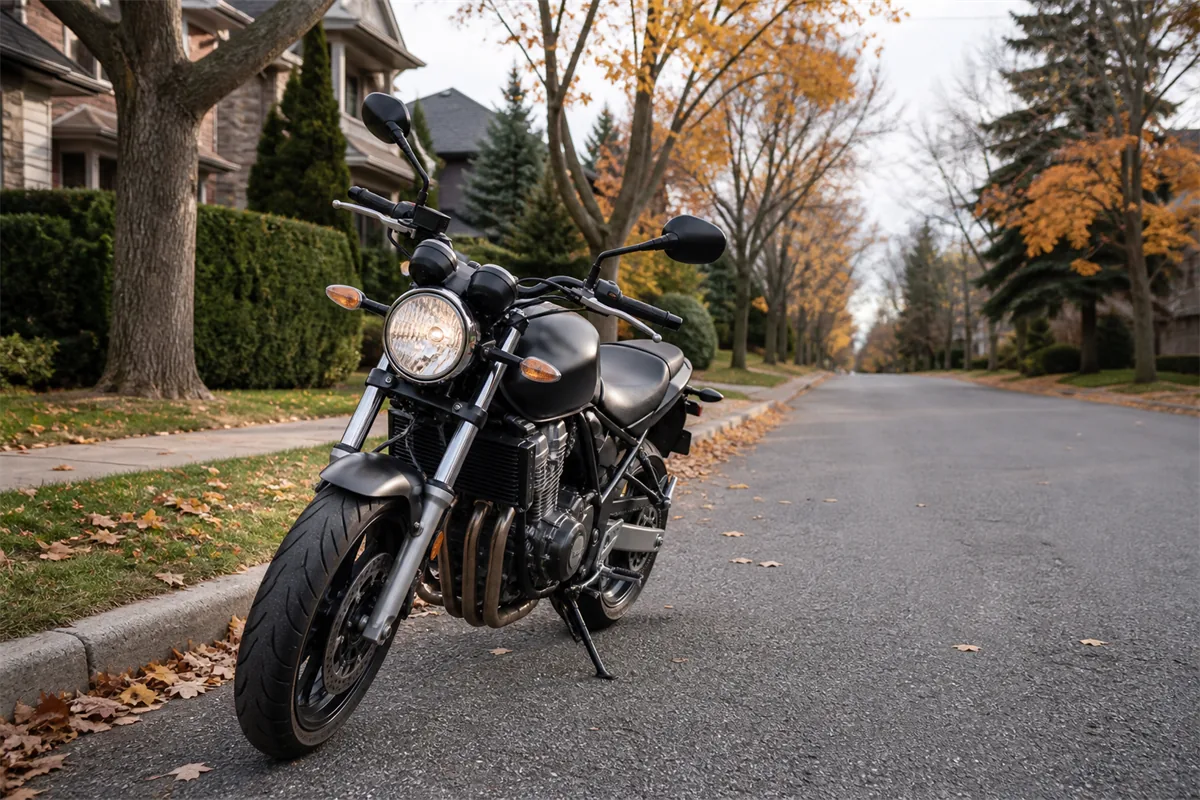
You are parking on a hot afternoon at the edge of a car park where the asphalt is soft and the ground slopes slightly.
Correct answer: Point the bike so it cannot roll away, leave it in gear, and put something firm under the stand
A side stand is a small foot carrying a lot of weight, and it sinks into hot asphalt or soft ground until the bike goes over. Leaving it in gear stops it rolling off the stand, and choosing which way it points means gravity holds the machine in place rather than pushing it away.
Highway Traffic Act (Ontario)
Sample question 7Rules of the road
It is a bright, clear morning with the sun high. What is your headlight doing for you in that light?
Correct answer: Giving drivers a bright point to notice, which is why a motorcycle runs it in daylight
The problem on a bike is not seeing, it is being seen, and a headlight turns a narrow shape that is hard to judge into something bright that catches a driver mid glance. It is not a promise that you have been seen, so ride as though you have not, but it stacks the odds your way.
Highway Traffic Act (Ontario)
Sample question 8Rules of the road
A rider argues that one drink before setting off is fine, because riding takes less concentration than driving.
Correct answer: It is the wrong way round: a bike needs balance and fine control, which alcohol takes first
The first things alcohol takes are balance, the judgement of speed and the ability to do two things at once, which is most of what riding is. A car keeps rolling in a straight line while a slow driver catches up, and a motorcycle does not, so the margin a rider has is smaller rather than larger.
Highway Traffic Act (Ontario)
Sample question 9Rules of the road
You passed the M1 knowledge test this week. Dinner across town runs late and you want to ride home after dark.
Correct answer: You cannot ride at night on an M1, and the same stage bars passengers and any alcohol
The M1 is a learning stage, and its conditions strip out the situations that catch new riders: darkness, a passenger changing the balance, alcohol, and the fastest provincial highways. Riding outside those conditions is riding without a valid licence, however well you ride otherwise.
Highway Traffic Act (Ontario)
Sample question 10Rules of the road
You need to stop as quickly as you safely can, in a straight line, on dry pavement.
Correct answer: Squeeze the front brake progressively and add the rear, since weight moves forward as you slow
The moment you start slowing, weight shifts onto the front wheel, pressing that tire into the road while the rear goes light. Squeezing rather than grabbing gives the weight a moment to arrive, and that is what lets you use the front brake hard without locking it.
Highway Traffic Act (Ontario)
What sits behind these runs
Every question here was written against the handbook and the legislation that Ontario Ministry of Transportation publishes, and every one carries the reason for its answer and the section it rests on.
Questions written
60
On road signs
20
On the rules
40
Subjects covered
6
All four figures are counted from the questions themselves when the site is built, rather than typed in by hand.
None of them is copied from another practice site, and none is generated from an unnamed source. If a question looks wrong to you, it may be wrong: say which one and what you think it should say, through the corrections route on the methodology page, and it gets checked against the source rather than argued about.
We use Google Analytics and Microsoft Clarity to see which pages help learners, and advertising cookies to keep the site free to use. Accept to allow them, or decline. How your data is handled