Motorcycle knowledge test practice 2026: 60 free questions
For the real Motorcycle knowledge test, 40 questions, pass 32 of 40, 45 minutes. This free practice hub has 60 questions with the answer, an explanation and a citation. Source: ICBC, Before you take your knowledge test (form MV2654), checked 2026-08-28.
60 questions20 on road signs40 on the rulesPass mark 32 of 40 correct
The number beside each subject is how many questions we have written on it for British Columbia motorcycle. A subject appears here once there are enough of them to be worth sitting down with.
A sample of 10 questions from the Motorcycle knowledge test bank, spread across its subjects and shown in full before you start.
Sample question 1Road signs
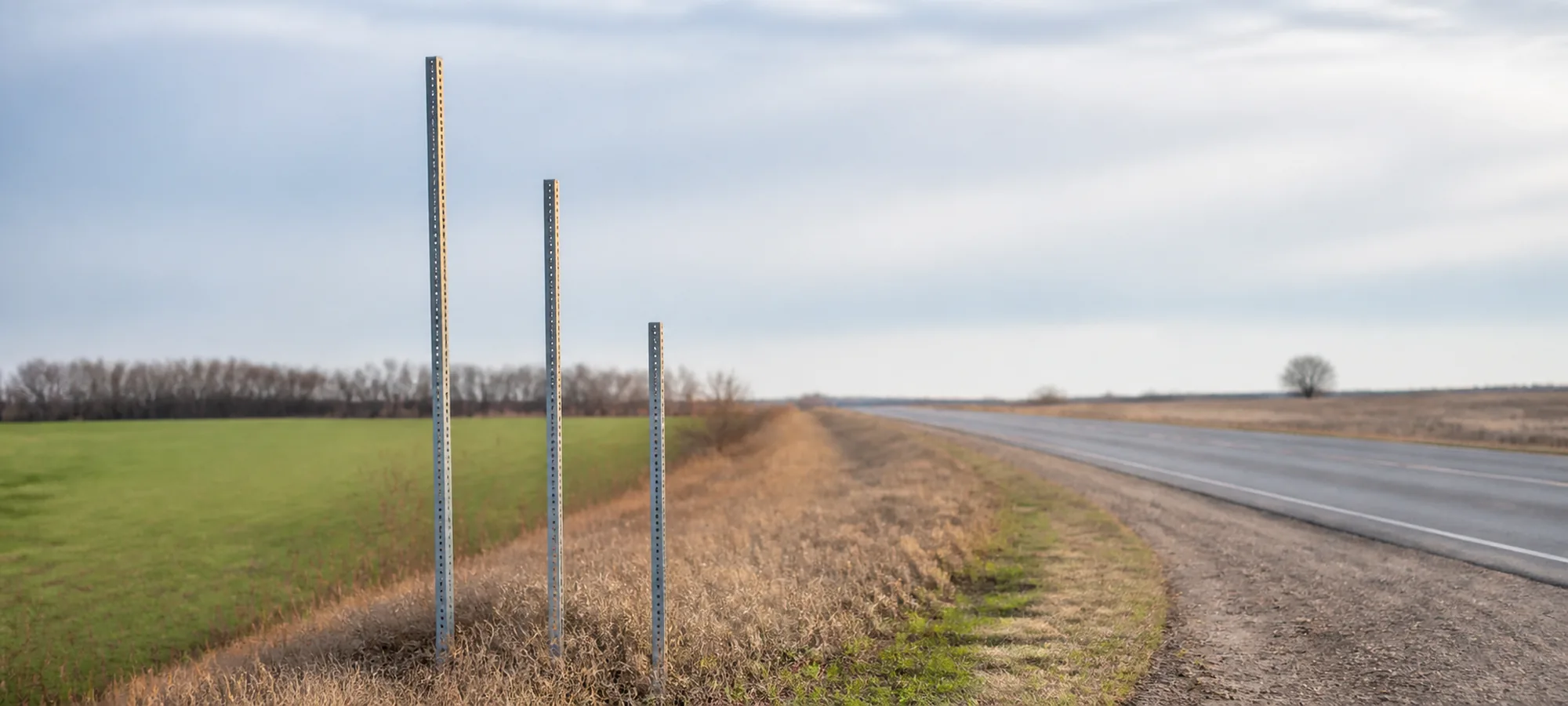
Rain has started and you meet this sign on a busy two lane road. The car ahead of you holds its speed and stays in the middle of the lane.
Correct answer: Slow more than the car does and move out of the middle of the lane
A motorcycle puts two small patches of rubber on the road where a car puts four large ones, so the same wet surface costs you far more of your margin. The middle of a traffic lane is also where oil and rubber build up, and rain lifts that film to the surface. Slowing further and riding in a wheel track gives you cleaner pavement and more room to be wrong.
Motor Vehicle Act (British Columbia)
Sample question 2Rules of the road
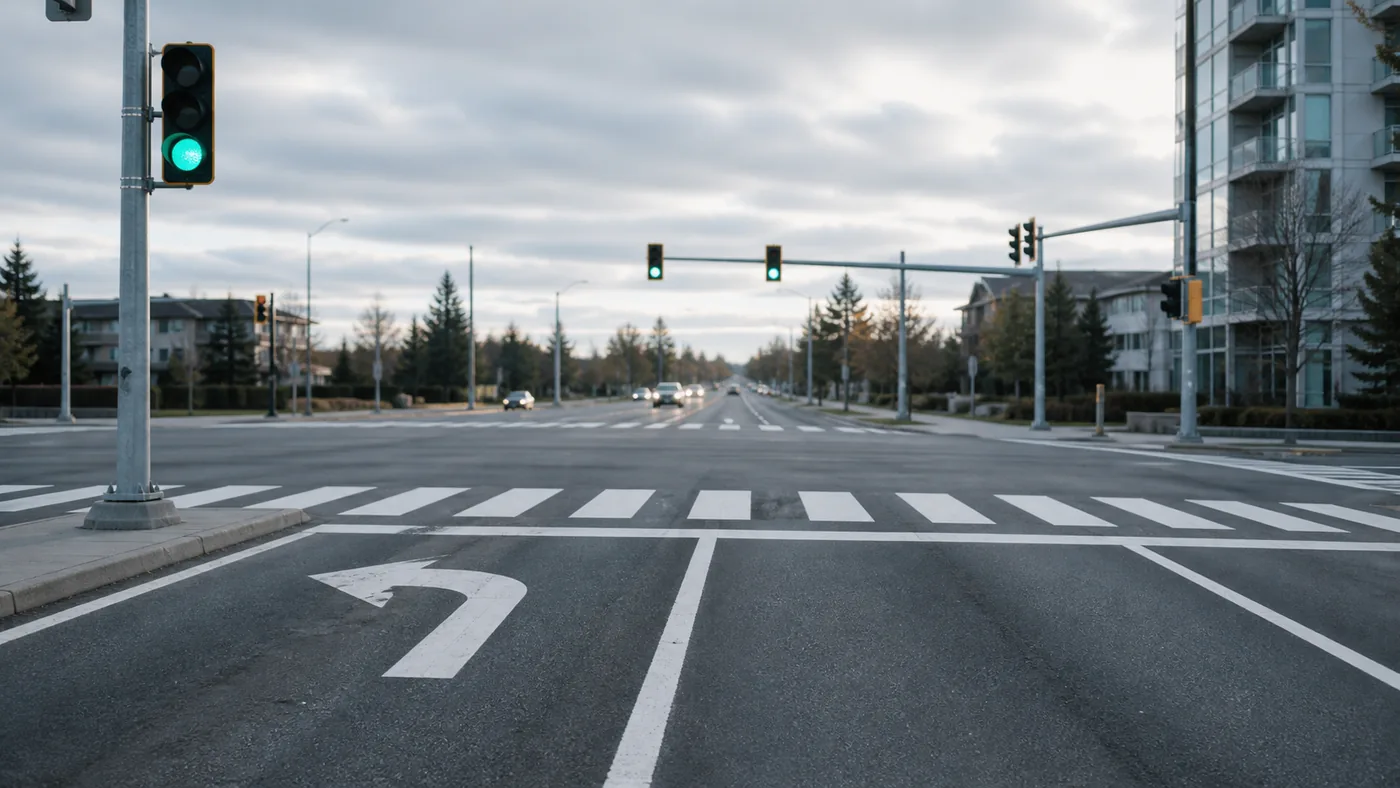
You are waiting at an intersection to turn left. An oncoming car is signalling a right turn into the street you want to leave by.
Correct answer: Wait until the car has actually begun its turn and slowed for it
A signal is a statement of intent, not a promise, and one left on from an earlier turn or switched on by mistake will put a rider under the front of a car that never slowed. Waiting for the car to slow and start turning is the only evidence worth acting on. On a motorcycle the cost of being wrong is not a dented panel, so buy the extra second.
Motor Vehicle Act (British Columbia)
Sample question 3Rules of the road
At highway speed you need to move the bike to the left quickly to avoid something in your path.
Correct answer: Press forward on the left handgrip, which leans the bike to the left
Above walking pace a motorcycle turns by leaning, and the fastest way to make it lean is to steer the front wheel very briefly the other way. Pressing the left grip does exactly that, so the bike drops to the left and turns left. This is why a rider who only shifts body weight moves so much more slowly than one who uses the bars, and why the reflex to pull the bar toward the danger steers you into it.
Motor Vehicle Act (British Columbia)
Sample question 4Rules of the road
You are following a car on a wet main road and you are working out how big a gap to leave.
Correct answer: A longer gap than you would leave in a car, because you need to see the surface as well as the brake lights
A rider is reading the road surface as well as the traffic, and the car ahead hides the pothole, the drain cover and the diesel spill until its own wheels have passed them. Wet pavement then stretches the distance you need to stop on two small contact patches. A longer gap gives you the view and the room, and it costs almost nothing in time.
Motor Vehicle Act (British Columbia)
Sample question 5Rules of the road
A driver behind you pulls out and starts to pass you inside your own lane, without moving into the next lane at all.
Correct answer: Hold your lane position and let them either pass properly in the other lane or stay behind
A motorcycle is entitled to the full width of a traffic lane, and another vehicle overtaking within that same lane is not permitted. Giving up your position teaches the driver that sharing a lane with a rider works, and it puts you on the dirtier, more broken part of the road. Hold what is yours, keep an escape path in mind, and let them make the proper lane change.
Motor Vehicle Act (British Columbia)
Sample question 6Rules of the road
You are first in line stopped at a red light in city traffic.
Correct answer: Stay in gear, keep a gap to the vehicle ahead and watch the mirror until the vehicle behind you has stopped
A stationary motorcycle is easy to run into and there is nothing behind you to absorb it, so the mirror matters more than the light does until the vehicle behind has settled. Staying in gear with a gap ahead means you can move out of the way instead of watching it happen. Neutral takes that option away at the one moment you might need it.
Motor Vehicle Act (British Columbia)
Sample question 7Rules of the road
You are riding on a bright, clear afternoon in city traffic. Your headlight is on low beam.
Correct answer: Leave the low beam on, because a lit headlight helps you stand out against a busy background
A motorcycle is a narrow shape against shop fronts, parked cars and moving traffic, and a lit headlight is one of the few things that separates it from all that clutter. Daytime high beam is a poor answer because it dazzles the drivers you most want to think clearly about you, including the one waiting to turn across your path. Low beam gives you the contrast without the glare.
Motor Vehicle Act (British Columbia)
Sample question 8Rules of the road
You have had a couple of drinks at the home of a friend and your motorcycle is parked outside. The ride home is short and quiet.
Correct answer: Leave the bike and get home another way
Alcohol goes first for balance, judgement of speed and the ability to do two things at once, which is more of what riding needs than driving does. A motorcycle also has to be held up, so an impaired rider can fall over at a stop sign without anything else going wrong. Time is the only thing that clears it, and it takes far longer than most people expect.
Motor Vehicle Act (British Columbia)
Sample question 9Rules of the road
You have held a full British Columbia car licence for years and a friend offers to lend you a motorcycle for the weekend.
Correct answer: You need a motorcycle licence of your own, which starts with the motorcycle knowledge test
A motorcycle is its own licence class in British Columbia, and holding a full car licence does not cover it. The way in is the motorcycle knowledge test, which gets you a learner motorcycle licence with conditions attached, and a road test later for the full class. The rules and the risks on two wheels are different enough that the province tests them separately.
Motor Vehicle Act (British Columbia)
Sample question 10Rules of the road
You need to stop your motorcycle as quickly as it will stop on dry pavement, in a straight line.
Correct answer: Use both brakes, applying the front progressively and firmly, because most of the stopping comes from the front wheel
Slowing down throws weight forward onto the front tire, which presses it into the road and gives it far more grip than the rear has left. That is why the front brake does most of the work and why the rear becomes easy to lock as the weight comes off it. Squeezing the front progressively lets the weight arrive before the force does, so the tire is loaded by the time you ask it for everything.
Motor Vehicle Act (British Columbia)
What sits behind these runs
Every question here was written against the handbook and the legislation that Insurance Corporation of British Columbia (ICBC) publishes, and every one carries the reason for its answer and the section it rests on.
Questions written
60
On road signs
20
On the rules
40
Subjects covered
5
All four figures are counted from the questions themselves when the site is built, rather than typed in by hand.
None of them is copied from another practice site, and none is generated from an unnamed source. If a question looks wrong to you, it may be wrong: say which one and what you think it should say, through the corrections route on the methodology page, and it gets checked against the source rather than argued about.
Fees read from the ICBC fee list on the same date.
We use Google Analytics and Microsoft Clarity to see which pages help learners, and advertising cookies to keep the site free to use. Accept to allow them, or decline. How your data is handled