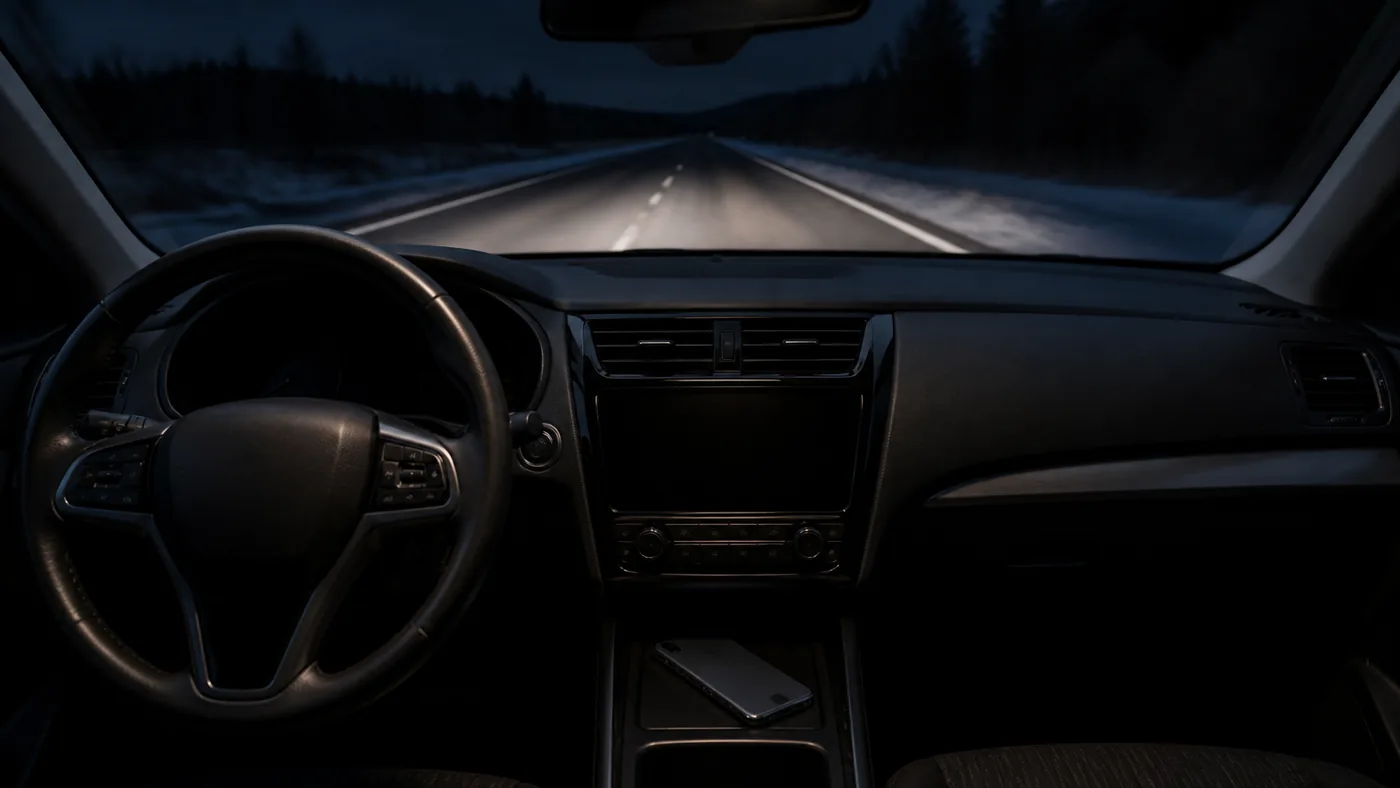
Quebec asks about impaired and distracted driving in 5 of our questions, and has 1 rule here that differs from the national ones. Alcohol, cannabis, prescription medicine, fatigue and the phone. What impairment actually does to driving, what the law expects of a new driver, and why distraction belongs in the same lesson.
About 7 minutes to read5 Quebec questions on thisLast reviewed 2026-08-27
Worth remembering
Only time removes alcohol from the body. Coffee, food, air and a shower do nothing.
Every province requires zero alcohol for drivers in the graduated system; penalties and suspensions are provincial.
Impaired driving carries both federal criminal consequences and provincial licence consequences for the same event.
Refusing a lawful roadside breath demand is an offence in itself.
Legal cannabis is not permission to drive after using it, and roadside testing covers drugs as well as alcohol.
Prescription and over the counter medicines can impair. Read the label and ask a pharmacist.
Fatigue produces microsleeps you never notice. The only fix is to stop and rest.
Handheld phone use is banned everywhere in Canada, including while stopped at a light, and distraction is about attention rather than hands.
What impairment does to a driver
Driving is a task of watching, judging and acting, over and over, in that order. Anything that slows one of those three steps makes you a worse driver, and impairment slows all three at once. Alcohol lengthens reaction time, narrows attention onto whatever is straight ahead, blurs the judgement of speed and distance, and, worst of all, makes the driver feel that everything is going fine. A drinker who feels capable is showing an early symptom, not making an assessment.
Nothing speeds the process up. Coffee, a cold shower, fresh air and food do not remove alcohol from the body; only time does. A driver who feels sober the morning after a heavy night may still be impaired, which is why the safest plan is made before the first drink rather than after the last one: somebody else drives, transit takes you, or you stay put.
Canada treats impaired driving as one of the most serious offences on the road, and both federal criminal law and provincial licence law apply to the same event. A driver can face criminal charges and, separately, an immediate roadside licence suspension and vehicle impoundment under provincial rules. Police may demand a breath sample at the roadside, and refusing to give one is itself an offence.
The rules for learners and new drivers
Every province in Canada requires drivers in the graduated licensing system to have no alcohol in their body at all while driving. There is no allowance and no small amount that is acceptable. The same zero expectation applies to drugs that impair. The penalty for breaking it, and how long it sets your progress back, are set by each province, so check your own province page for the figures.
That zero rule is stricter than the general limit that applies to fully licensed drivers, and it exists for a plain reason: a new driver is already using most of their attention on the basic task of driving, and has the least experience to fall back on when something goes wrong. Many provinces extend the same zero requirement to all drivers under a certain age, whatever licence they hold.
The exact blood alcohol limits, the warning ranges that trigger a short roadside suspension, the penalties and the length of every suspension are provincial numbers, and they change. Use the page for your province rather than a figure remembered from somewhere else, and never rely on a number you saw in a film or in another country.
Cannabis, medicine and fatigue
Cannabis being legal to buy does not make it legal to drive after using it. It affects reaction time, attention and the ability to judge distance, and the impairment can last well beyond the point where the person feels high. Police test for drug impairment at the roadside as well as alcohol, and the criminal offence is impaired driving whatever the substance was.
Prescription and over the counter medicine belongs in the same lesson. Antihistamines, sleep aids, strong painkillers, some cough medicines and some anxiety medicines all cause drowsiness or slowed reaction. Read the label, ask a pharmacist whether it affects driving, and take the warning seriously. Mixing any of them with alcohol multiplies the effect rather than adding to it.
Fatigue impairs a driver in much the same way as alcohol: slower reactions, poorer judgement and wandering attention. The dangerous part is the microsleep, a few seconds of unconsciousness the driver does not notice, during which the vehicle travels a long way unattended. If you are yawning, drifting in your lane, missing exits or cannot remember the last stretch of road, the answer is to stop and rest, not to open a window. On a long drive, plan breaks before you set out and share the driving where you can.
A waiting area at a public service office. The sitting itself is short. The paperwork around it is what takes the morning.
The phone, and every other distraction
Every province in Canada bans holding or using a handheld phone while driving, and the ban applies while you are stopped in traffic or waiting at a light, because you are still in charge of a vehicle in a live lane. Hands free use is permitted in most places, subject to the conditions each province sets, and several provinces restrict even that for drivers in the graduated system. Penalties are provincial and heavy, and they usually include points against your record as well as a fine.
The reason for the law is not the hand holding the phone. It is the attention. Reading a message takes your eyes off the road for long enough to cover a startling amount of ground blind, and even a conversation on a hands free device pulls part of your mind off the task. A distracted driver looks straight at a hazard and does not see it, which is why the collisions look like nobody braked at all.
Phones are the obvious case and far from the only one. Eating, reaching for something on the floor, programming a navigation system while moving, turning around to deal with passengers, loud arguments in the car, grooming and watching something happening at the roadside all take attention away. Set up everything before you move: mirrors, seat, music, route, phone on do not disturb, and anything you might want within reach. If something needs your attention while driving, pull over somewhere safe and deal with it stopped.
What examiners and police both look for
On a road test, a phone in your hand ends the test. So does any sign that you are not fit to drive. But the deeper point is what impairment and distraction have in common: both remove the margin you have been building all through the rest of this material. Following distance, early scanning, the head check and speed suited to conditions all exist to buy you time, and an impaired or distracted driver spends that time before the hazard even appears.
The one habit worth carrying out of this lesson is deciding in advance. Decide how you are getting home before you go out. Decide that the phone is away before you start the engine. Decide to stop when you are tired rather than negotiating with yourself at the wheel. Decisions made in advance hold up much better than decisions made by a tired driver in a moving car.
What Quebec does differently
Everything above holds across Canada. This part does not, and it is the part a Quebec examiner can ask about.
Quebec rule
Zero alcohol, points, and the phone
The zero alcohol rule in Quebec reaches further than the licence stages do. It applies to learner and probationary holders, and it applies to young drivers up to an age the SAAQ publishes, whatever licence they hold. Enforcement is administrative first, which means a suspension can be handed to you at the roadside long before any court date, and the licence goes with the officer.
Demerit points count against a lower threshold for new drivers, and points collected on a probationary licence can stop you moving up to a full one. That is a slower and more expensive punishment than the ticket that caused it, because it holds you in a stage with conditions attached rather than simply costing you money. The SAAQ publishes the thresholds and they do get changed.
Quebec is strict about phones. The ban covers having the device in your hand while you are at the wheel in traffic, including while you are stopped at a red light, and the penalty grows with repetition. A phone in a mount, operated by voice, keeps you inside the rule. For a new driver a single conviction can be what stops the move to a full licence, which is the argument for leaving it alone that actually works.
Where people get this wrong
What people think
I know my limit and I drive fine after a couple of drinks.
What is actually true
Feeling capable is one of the first things alcohol changes. Self assessment is the ability that goes early, which is why the law uses measurement rather than opinion.
What people think
Coffee and fresh air will sober me up before I drive.
What is actually true
They may make you feel more alert while your reaction time, judgement and vision remain impaired. Alcohol leaves the body at its own pace and nothing changes it.
What people think
Using my phone at a red light is allowed because I am stopped.
What is actually true
You are still driving in the eyes of the law, in a live lane, in charge of the vehicle. Every province treats picking up the phone at a light as the same offence as using it while moving.
What people think
Hands free is safe, so I can hold a full conversation.
What is actually true
Hands free is legal in most places, not free of cost. The attention the call takes is what causes drivers to look at a hazard without seeing it. Keep calls short or leave them.
What people think
I can push through tiredness for the last stretch of the drive.
What is actually true
A microsleep lasts a few seconds and you will not know it happened. Stopping to sleep is the only fix, and planning the breaks before you leave is easier than deciding at the wheel.
Check yourself
Three questions from the Quebec bank on impaired and distracted driving. Answer them in your head first, then open the answer to see the rule it comes from.
Impaired and distracted driving1 of 3
You hold a learner's licence and have one glass of wine with dinner, well under the limit that applies to a fully licensed driver.
AYou may drive, since you are under the general legal limit
BYou may not drive, because no alcohol at all is allowed while you hold this licence
CYou may drive after waiting an hour for each drink
DYou may drive if an experienced licensed driver sits beside you
Show the answer
The answer is B. You may not drive, because no alcohol at all is allowed while you hold this licence
Learner's and probationary licence holders drive under a zero alcohol rule, so the general limit for experienced drivers is not the one being applied to them. Any alcohol at all is enough for an offence and an immediate suspension at the roadside. Waiting an hour or carrying a passenger changes nothing, because it is the reading that counts.
Highway Safety Code (Quebec)
Impaired and distracted driving2 of 3
You are stopped at a red light with the engine running, and you pick up your phone to read a message that has just arrived.
AThis is allowed, because the car is not moving
BThis is allowed if you put the phone down before the light changes
CThis is an offence, because you are still driving while you sit in traffic
DThis is allowed as long as you only read and do not type
Show the answer
The answer is C. This is an offence, because you are still driving while you sit in traffic
You are the driver of a vehicle in a traffic lane whether the wheels are turning or not, so the handheld rule applies at the light exactly as it does at speed. Quebec goes further than many places by treating holding the phone as the offence, so reading rather than typing is no defence. If you have to use it, park properly first.
Highway Safety Code (Quebec)
Impaired and distracted driving3 of 3
A pharmacist warns that a medicine you have just been prescribed may cause drowsiness, and you have an errand to run by car.
ADo not drive until you know how the medicine affects you
BDrive, because a prescribed medicine cannot count as impairment
CDrive, but keep to quiet streets and a low speed
DDrive after a strong coffee to offset the drowsiness
Show the answer
The answer is A. Do not drive until you know how the medicine affects you
Impairment is judged by your condition at the wheel, not by whether the substance was legal or prescribed for you. Drowsiness slows reactions and blurs judgement in much the same way alcohol does, and the warning on the label is there because the effect is real. Find out how it affects you somewhere other than the road.
Highway Safety Code (Quebec)
Now go and answer some questions
The Quebec bank holds 5 questions on impaired and distracted driving. Answering them now, while the lesson is fresh, is how you find the parts that only felt clear.
We use Google Analytics and Microsoft Clarity to see which pages help learners, and advertising cookies to keep the site free to use. Accept to allow them, or decline. How your data is handled